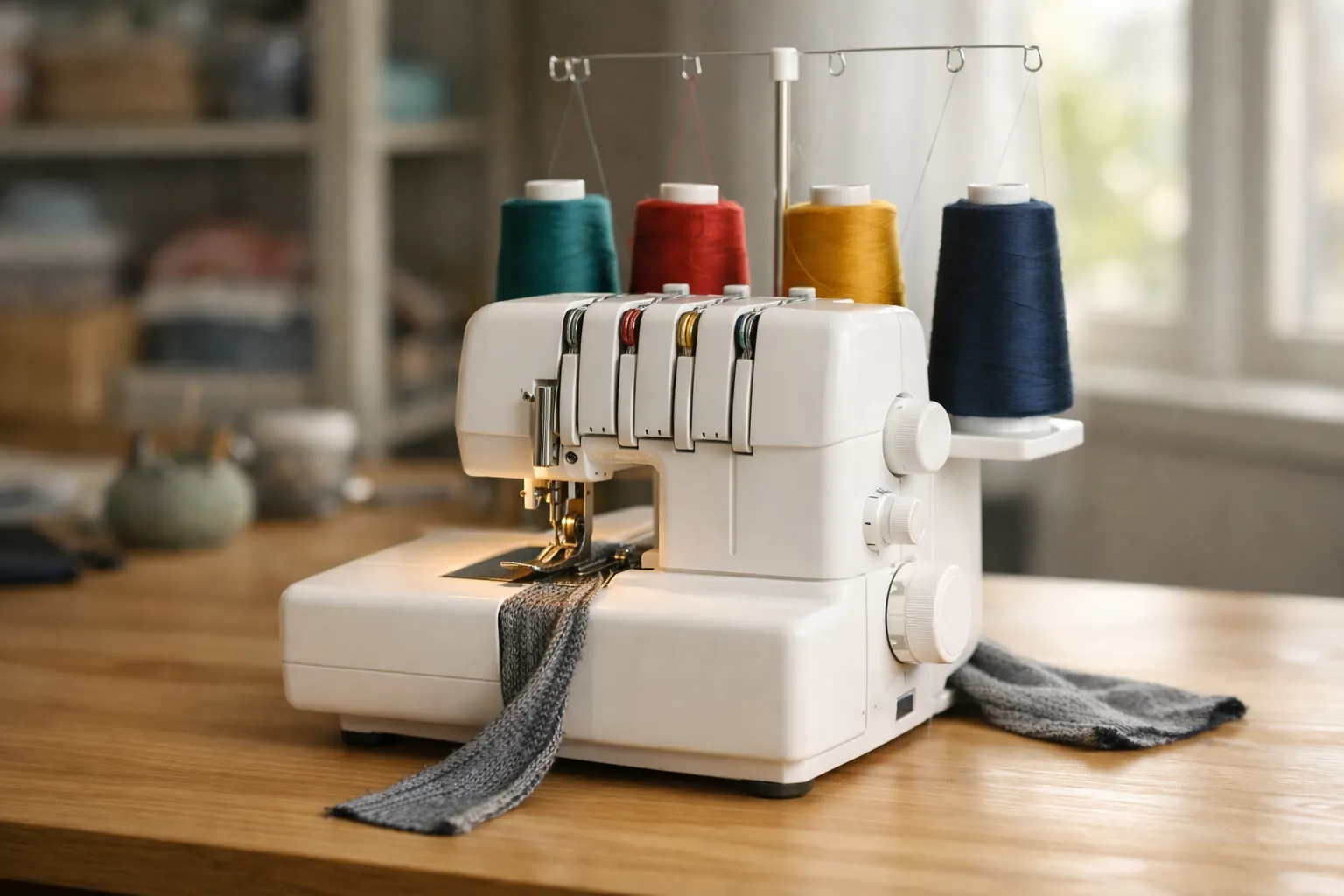
Buy whichever one is cheaper on the day. Brother lists the 1034D and 1034DX with the same 1,300 stitches per minute, the same 3/4-thread overlock and the same three presser feet. What the DX adds, per Brother's product page, is an LED work light, a soft dust cover and four mini spools of thread. Both are current models: Brother's site shows each one with the status "New", checked October 3, 2026, so the "is the 1034D discontinued?" rumor is wrong.
The more useful differences are in the manuals. They thread in a different order, and their rolled hem tension charts don't match. That matters more once the machine is on your table than anything on the box.
Quick picks
| Best buy of the pair | Brother 1034D | Amazon |
|---|
Status first: neither one is discontinued
Several of the top results for this search either guess at the status or say the 1034D is on its way out. Brother's own product data says otherwise. Each product page on brother-usa.com carries a lifecycle field, and on October 3, 2026 both the 1034D page and the 1034DX page read "New". The same check shows the 1634D as current too. We'll re-check this when Brother changes the pages, and the date above tells you how fresh it is.
How we compared them
This is a spec review. We didn't serge on either machine. Every number below comes from one of four places:
- Brother's US product pages for each model, read October 3, 2026
- the 1034D handbook Brother hosts on its support site (product code 884-345, version 07)
- the 1034DX operation manual on the same site (product codes 884-B02 and B03, version 06)
- the 1034D Amazon listing, which showed 1,000+ bought in the past month and 12,177 ratings at 4.6 stars, ranked #1 in Sergers & Overlock Machines
Where Brother's page and the manual disagree (stitch width is one), we say so and give both. How we research.
Side-by-side specs
| Spec | 1034D | 1034DX | Source |
|---|---|---|---|
| Brother status (Oct 3, 2026) | New (current) | New (current) | brother-usa.com |
| Threads / needles | 3 or 4 threads, 1 or 2 needles | 3 or 4 threads, 1 or 2 needles | Product pages, manuals |
| Top speed | 1,300 stitches/min | 1,300 stitches/min | Product pages |
| Feet included | 3 (standard, gathering, blind stitch) | 3 (standard, gathering, blind hem) | Amazon listing (D), product page (DX) |
| Work light | Bulb | LED | Product pages |
| In the box, beyond feet | Trim trap, front-door tool storage, printed manual | Soft cover, 4 mini spools of thread, thread nets and spool caps | Product pages, DX manual |
| Stitch length | 2 to 4 mm (normal 2.5 to 3) | 2 to 4 mm (normal 3) | Manuals |
| Stitch width | Manual: 2.3 to 7 mm (two-needle). Product page: 3 to 7 mm | Manual: 2.3 to 7 mm | Manuals, 1034D page |
| Differential feed | Yes | Yes (0.7 to 2.0, normal 1.0) | Product pages, DX manual |
| Free arm | Yes | Yes (remove the bed extension) | 1034D page, DX manual |
| Needles | 130/705H, #80 and #90 | 130/705H, #80 and #90 | Manuals |
| Machine weight (manual) | 7.0 kg | 5.6 kg | Manual spec pages |
| Threading order (manual) | Upper looper first | Lower looper first | Manuals |
The 1034D weight comes from the older handbook Brother still hosts for that model. Amazon's listing gives 8 pounds. The machine sold today may have changed since that handbook was printed, so treat the weight as approximate.
The difference nobody mentions: threading order
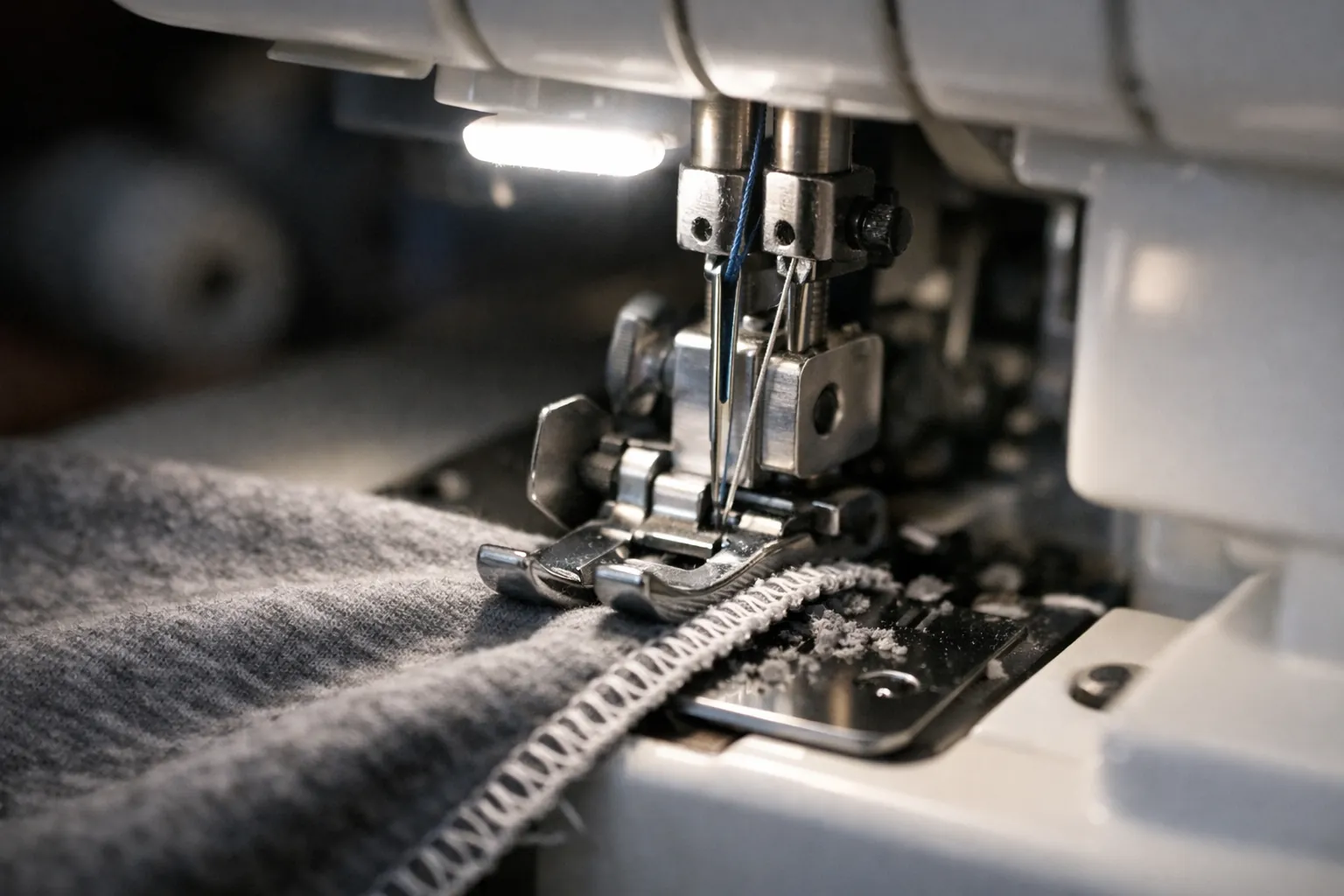
A serger only forms a stitch if its threads go on in the right sequence, and the two manuals don't agree on that sequence. Brother's 1034D handbook (page 16) says: upper looper, lower looper, right needle, left needle. The 1034DX manual (page 15) says: lower looper, upper looper, right needle, left needle. Both manuals describe the same lower looper threading lever, which slides the looper out to the right so you can reach its eye, so the lever isn't the reason for the different order.
The 1034D handbook on Brother's support site is an older document (version 07, from 2015), and the machine in today's box may differ in small ways from its drawings. So the practical rule is: follow the threading chart printed inside your own machine's front cover. Both manuals agree on the part that trips people up most, which is that both loopers go on before either needle. Our 1034D threading guide walks through both versions.
Rolled hem settings differ too
Both machines sew a rolled hem the same way: take out the left needle, remove the stitch finger, and set the length and width dials to R. The tension charts are where they part ways.
| Rolled hem, starting tensions | Needle | Upper looper | Lower looper |
|---|---|---|---|
| 1034D handbook (light fabrics) | 4 (3 to 5) | 3 (1 to 4) | 6 (5 to 7) |
| 1034DX manual, fine fabrics | 4 (3 to 5) | 5 (4 to 6) | 7 (6 to 8) |
| 1034DX manual, medium fabrics | 5 (4 to 6) | 5 (4 to 6) | 7 (6 to 8) |
If you copied rolled hem numbers from a video made on the other model, this explains why your edge doesn't roll. Start from your own manual's chart. The full set of starting points for every stitch is on our 1034D tension settings page.
Which one to buy
Brother 1034D
This is the one with the big owner base. The Amazon listing had 12,177 ratings and 1,000+ purchases in the past month when we checked, and it sat at #1 in Sergers & Overlock Machines. That matters on a serger more than on most machines: when a looper thread keeps snapping at 10 p.m., there are thousands of people who've already posted the fix for this exact model.
Brother's page lists five stitches (4-thread and 3-thread overlock, narrow hem, rolled hem and ribbon lock), differential feed, a free arm and a retractable knife for sewing without trimming. The removable trim trap also holds the foot controller when you put the machine away.
- Threads3 or 4
- Speedup to 1,300 stitches/min
- Framemetal
- Feetstandard, gathering, blind stitch
- Needlesstandard 130/705H
- Brother statuscurrent (Oct 3, 2026)
Why it stands out
- Same speed, stitches and feet as the 1034DX
- Huge owner base for tutorials and troubleshooting
- Uses ordinary household needles
Think twice if
- You sew dark fabrics at night and want the brighter LED light
- You want a dust cover in the box
The 1034DX makes sense in two cases: you find it at the same price as the 1034D, or the LED light matters to you because you sew in a dim room. Brother's page doesn't list any extra stitch, extra speed or extra foot for it. We couldn't find a verified Amazon listing for the 1034DX on October 3, so we're not linking one. Brother's 1034DX product page lists its accessories and where to buy it.
Claims you'll see elsewhere, checked
"The 1034D has more stitch options." Both manuals list the same stitch selection: 4-thread overlock, 3-thread overlock at two widths (left needle for the wide one, right needle for the narrow one), plus narrow overlock and rolled hem. Brother's 1034D page also names ribbon lock, which is a variation of the 3-thread stitch. We found nothing you can sew on one and not the other.
"The 1034D is discontinued." Not according to Brother, as of October 3, 2026.
"The DX converts to 2-thread." Neither manual describes a 2-thread mode, and Brother's feature lists call both machines "3/4 thread". One internal spec field on the DX page is marked as a 2/3/4 thread change, but nothing in the manual backs it up, so we don't count it. If you need 2-thread flatlock or wrapped edges, look at a 2-3-4 thread serger; our beginner serger picks include two.
What to buy with either one
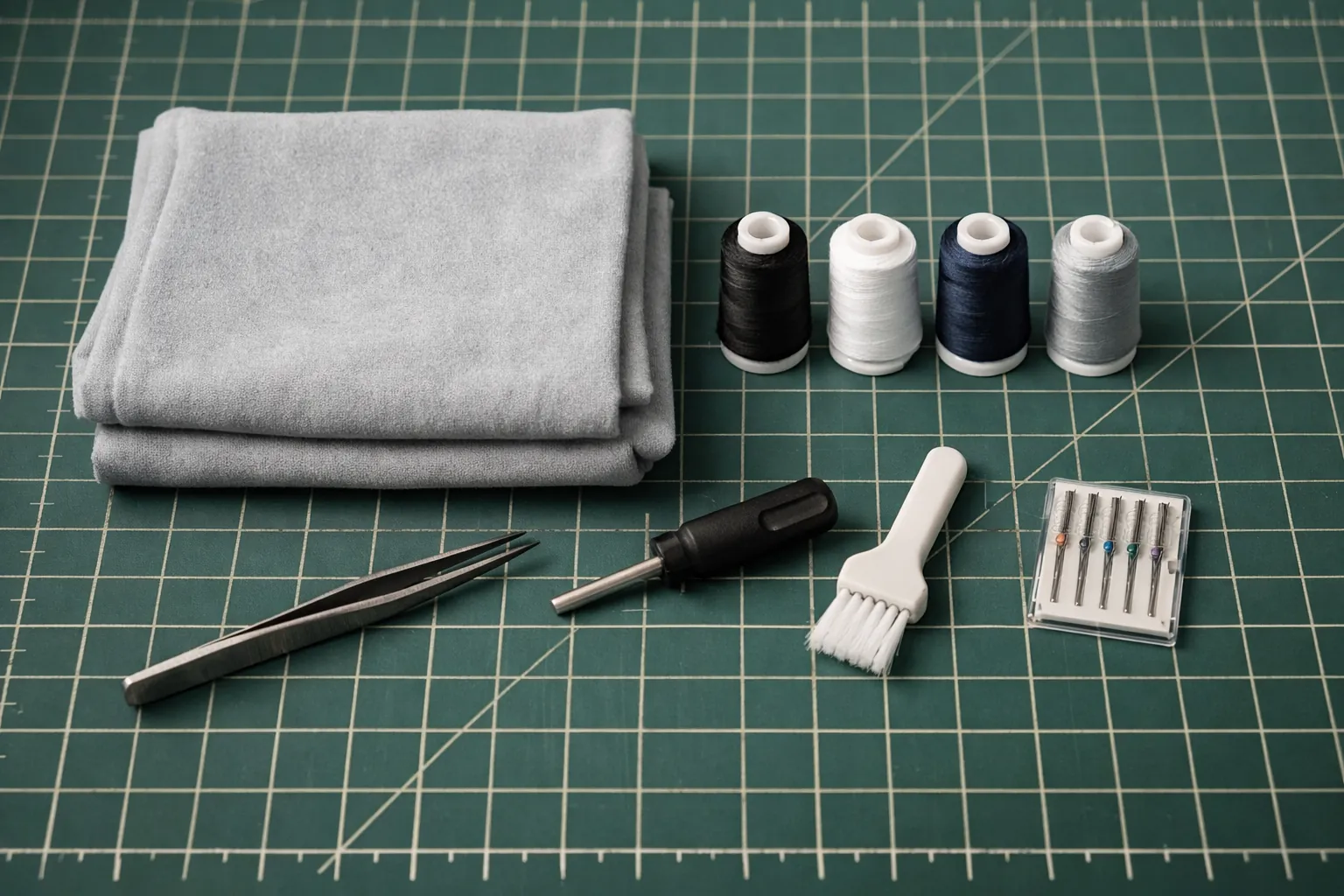
The included mini spools run out fast. Four cones of the same all-purpose serger thread, like the Maxi-Lock all-purpose 4-pack, make tension much easier to read because all four threads behave alike. Our serger thread guide compares the cone sets worth buying.
Both machines take regular household needles, so a card of Schmetz Universal 130/705H needles covers you. The 1034DX manual suggests a #90 ballpoint (130/705H SUK) if the needle is breaking the yarns in a knit.
For the knives, buy only a set whose listing names your model. The 1034D and 1034DX use different upper knife part numbers in the sets we found, for example this 1034D upper and lower knife set (X77683001 and XB0563001, per the listing).
New to sergers? Read sewing machine vs serger first. It explains what a serger replaces and what it doesn't.
Sources: Brother USA product pages for the 1034D and 1034DX; manuals on Brother's support site for the 1034D and 1034DX; the 1034D Amazon listing. All checked October 3, 2026. How we research · Affiliate disclosure