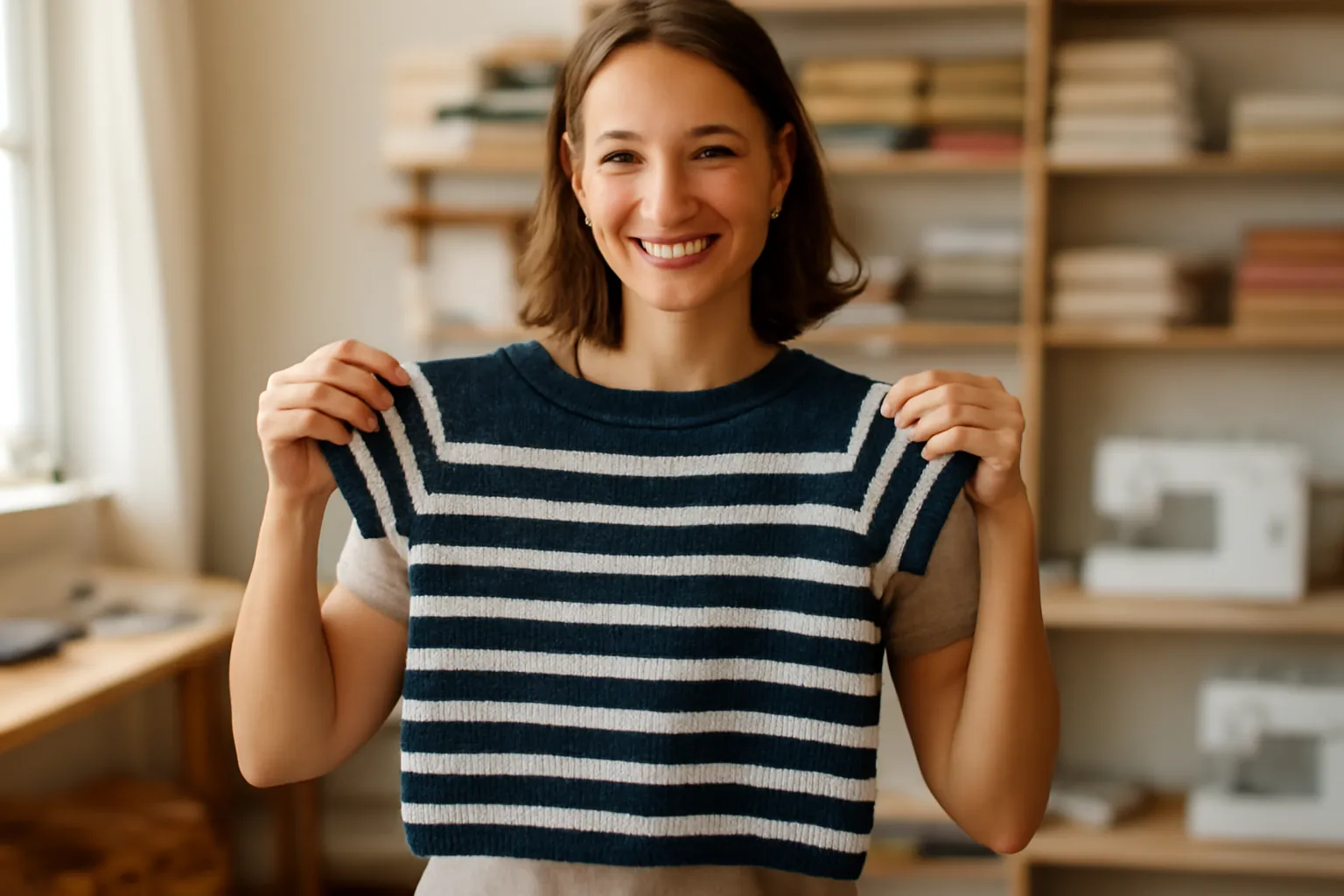
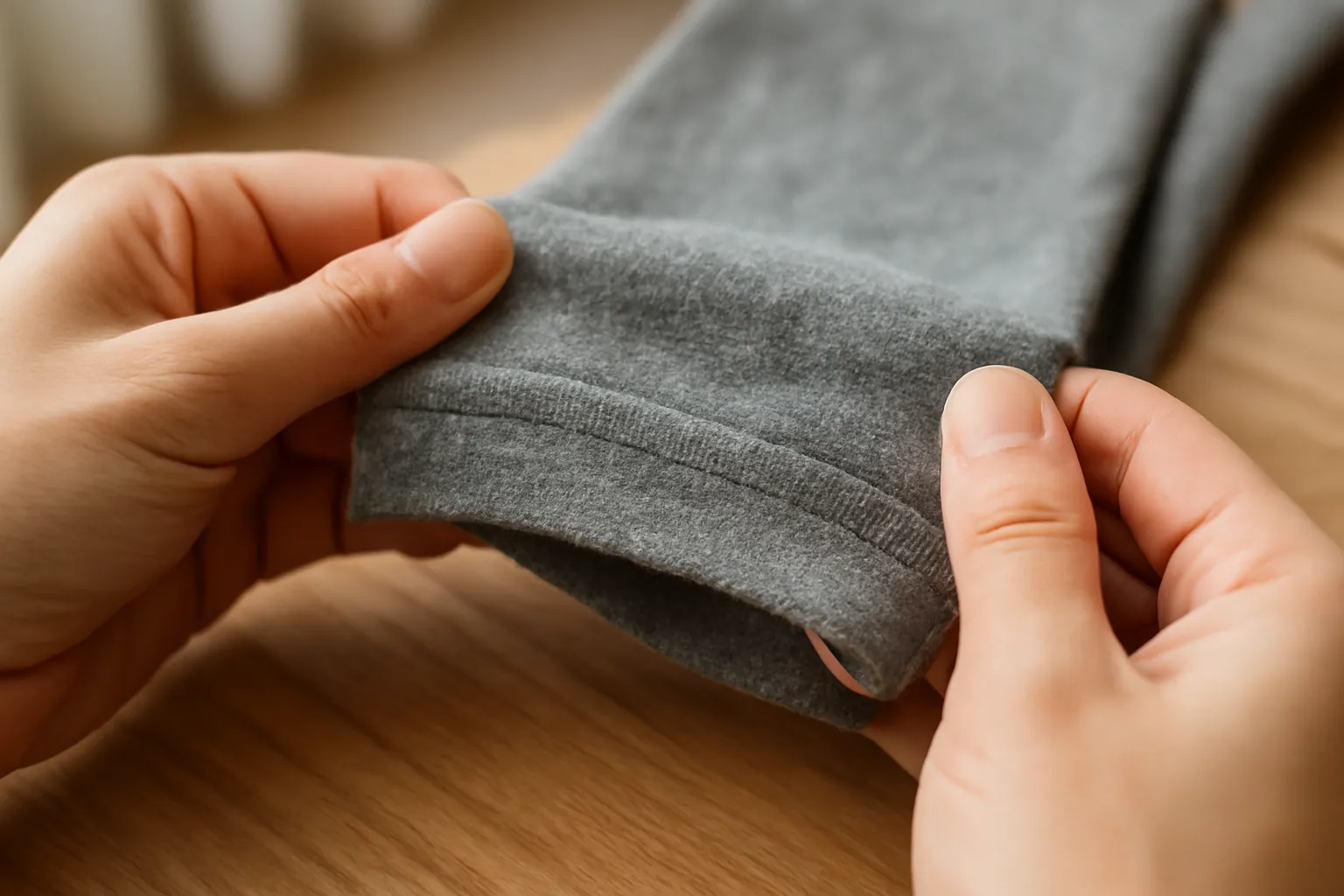
Buy the Brother 2340CV if you sew knits regularly and want the easiest, best-supported coverstitch machine; buy the Janome CoverPro 1000CPX if you hem a lot of sleeves and kids' clothes, because its free arm lets you sew them in the round. A coverstitch machine does one job: the stretchy, two- or three-line hem on store-bought T-shirts. If you only hem knits a few times a year, test a twin needle on your sewing machine before spending the money.
Quick picks
| Best for most home sewers | Brother 2340CV | Amazon |
|---|---|---|
| Best free arm | Janome CoverPro 1000CPX | Amazon |
| Best for fine-tuning thick knits | Janome CoverPro 2000CPX | Amazon |
| Fastest coverstitch | Juki MCS-1500 | Amazon |
| Best for activewear (top cover) | Janome CoverPro 3000 Professional | Amazon |
| Most compact | Bernette b42 Funlock | Amazon |
How we picked these machines
We looked at every dedicated coverstitch machine and cover-capable combo sold on Amazon US on October 13, 2026. One thing stood out: only the Brother 2340CV has a large Amazon owner base, with 1,200+ ratings. The rest carry dozens of ratings rather than thousands. We say so on each card, because it affects how much owner feedback you can lean on.
Specs come from each manufacturer's listing: needles and stitch formats, stitch width, differential feed range, speed, free arm, warranty. We weighted the stitch formats and the free arm most, because those decide which garments a machine can hem.
This is a spec review. We compared listings and read owner feedback and other reviewers' notes; we did not sew on every machine. How we research.
Coverstitch stitches explained: chain, narrow, wide and triple
Every coverstitch is built the same way: needle threads on top, one looper underneath that loops back and forth between them. What changes is how many needles you thread, and which ones.
| Stitch | Use it for |
|---|---|
| Chain stitch (1 needle) | Basting, decorative topstitching, seams that need to come out later |
| Narrow cover (2 needles) | Necklines, binding, lightweight jersey, kids' clothes |
| Wide cover (2 needles) | T-shirt and dress hems, the classic ready-to-wear look |
| Triple cover (3 needles) | Leggings, activewear and heavier knits where you want a stronger hem |
| Top cover (extra thread on top) | Flatlock-style seams on activewear and swimwear; only on machines with a top spreader, such as Janome's CoverPro 3000 Professional |
The 6 best coverstitch machines
Brother 2340CV
The default recommendation for a reason: it does the three cover stitches plus a chain stitch, it's built on a metal frame, and it has more owner ratings on Amazon (1,200+) than any other dedicated coverstitch. That last point matters on a machine whose threading order trips people up at first. There are a lot of other owners and tutorials to learn from.
Brother uses color-coded guides and lay-in threading, and the 0.7 to 2.0 differential feed handles the wavy-hem problem on stretchy jersey. Brother includes a hem-sewing foot alongside the standard foot.
- Stitchestriple, wide and narrow cover, chain
- Width3 to 6mm
- Speedup to 1,100 stitches/min
- Differential feed0.7 to 2.0
- Feetstandard + hem sewing foot
- Warranty25-year limited
Why it stands out
- All three cover stitches plus chain stitch
- Largest owner base of any coverstitch on Amazon
- 25-year limited warranty
Think twice if
- You hem lots of narrow tubes like sleeves and kids' leggings: there's no free arm
Janome CoverPro 1000CPX
The free arm is the reason to buy it. Janome's listing puts it plainly: you can stitch onto finished cuffs and pant legs without opening a seam. On a flat-bed machine like the 2340CV you hem those before closing the side seam, which isn't always how a pattern wants to be sewn.
Janome's Seam Tightening System is designed to keep tension consistent across knits from jersey to French terry, and the differential feed runs a little wider than Brother's, from 0.5 to 2.25. The bed gives you 4 x 5.5 inches to the right of the needle. It has far fewer Amazon ratings (67) than the Brother.
- Stitches2-thread chain, 3-thread cover, 4-thread triple cover
- Needles1, 2 or 3
- Bed4 x 5.5 in
- Differential feed0.5 to 2.25
- Speed1,000 stitches/min
- TensionSeam Tightening System (STS)
Why it stands out
- Free arm for sleeves and small hems
- Chain stitch plus cover and triple cover
- Wide differential feed range
Think twice if
- You want the biggest owner community for help: the Brother has far more
Janome CoverPro 2000CPX
The 2000CPX adds the controls you want when you move past T-shirt jersey into sweatshirt fleece and thick activewear. Adjustable foot pressure keeps heavy knits from shifting, and a tension release device and Janome's Tension Level Control help with the bulky spots where a hem crosses a seam. It keeps the free arm and 4 x 5.5 inch bed of the 1000CPX and adds an LED light.
- Stitcheschain, 3-thread cover, 4-thread triple
- Width6mm standard, 3mm narrow, 6mm triple
- Stitch length1 to 4mm
- Foot pressureadjustable with guide lines
- Differential feed0.5 to 2.25
- Extrasfree arm, tension release, LED light
Why it stands out
- Adjustable presser foot pressure
- Free arm plus large bed
- Listed widths for every stitch
Think twice if
- You only hem lightweight T-shirts; the 1000CPX does that for less
Juki MCS-1500
At 1,350 stitches per minute it's the fastest machine here, and Juki's color-coded guides make the loopers easier to thread. That speed matters most if you sew in volume, such as a small knitwear or kids' clothing shop. Juki's warranty is spelled out clearly in the listing: 5 years mechanical and 2 years electrical, excluding wear parts such as loopers and needles.
- Needles3
- Stitches3-thread cover, 4-thread chain
- Speed1,350 stitches/min
- Threadingcolor-coded guides
- Warranty5 yr mechanical, 2 yr electrical
Why it stands out
- Fastest speed of our picks
- Color-coded looper threading
- Clear warranty terms
Think twice if
- You want a big Amazon owner base: it has 235 ratings averaging 4.1 stars
Janome CoverPro 3000 Professional
This is the one for swimwear and activewear makers. Its 5-thread, 3-needle configuration and built-in top cover stitch guide let it add a decorative thread on the top of the seam as well as underneath, the look on athletic leggings and swimwear. Janome also lists a 3-position needle threader and LED lighting.
The Amazon listing has only six ratings, so for real owner feedback, look at dealer reviews and sewing forums before you buy.
- Configuration5-thread / 3-needle
- Top coverbuilt-in top cover stitch guide
- Tensionenhanced Tension Level Control
- Threading3-position needle threader
- LightLED
Why it stands out
- Top cover stitch for activewear and swimwear
- Built-in needle threader
- Bright LED lighting
Think twice if
- You sew everyday T-shirts and dresses; the 1000CPX or 2340CV covers that for much less
Bernette b42 Funlock
Bernette is Bernina's lower-priced line, and the b42 is its dedicated coverstitch. It does three coverstitches (2.8mm and 5.6mm wide) and a chain stitch, with an LED light and a needle threader. Its footprint is small, which helps in a sewing room that already holds a sewing machine and a serger.
The Amazon listing reads like general marketing copy in places, so check the stitch list against Bernette's own spec sheet before buying.
- Stitches3 coverstitches + chain stitch
- Widths2.8mm and 5.6mm
- Threadingseparate needle threader and looper threading
- LightLED
- Sizeabout 10 x 10 x 12 in (per listing)
Why it stands out
- Small footprint
- Needle threader and LED light
- Three cover widths plus chain
Think twice if
- You want a free arm: the Janome CoverPro machines have one
What about the Brother CV3550? Some reviewers rank it first, including Threads Monthly's owner review, which credits its top cover stitch and work area. The Brother CV3550 listing on Amazon has only eight ratings and doesn't list the stitch formats, so we couldn't verify its specs the same way. If you're considering it, confirm the details with a Brother dealer.
Side-by-side comparison
| Machine | Triple cover | Free arm | Top cover | Max speed | Amazon ratings |
|---|---|---|---|---|---|
| Brother 2340CV | Yes | No | No | 1,100 spm | 1,200+ |
| Janome 1000CPX | Yes | Yes | No | 1,000 spm | 67 |
| Janome 2000CPX | Yes | Yes | No | 1,000 spm | 67 |
| Juki MCS-1500 | Check listing (3 needles) | Check listing | No | 1,350 spm | 235 |
| Janome CoverPro 3000 | Yes | Check listing | Yes | Check listing | 6 |
| Bernette b42 | Yes (3 covers) | Check listing | No | Check listing | 94 |
"Check listing" means the Amazon listing doesn't say. Ratings counts as of October 13, 2026.
Do you need a coverstitch machine? Run the twin-needle test first
Before you buy, sew a test hem on your most-used knit with a stretch twin needle on your regular sewing machine. On top it looks much like a coverstitch. Underneath, the single bobbin thread zigzags between the two needle lines instead of forming a looped chain, so it stretches less and can pop on very stretchy fabric.
| If you sew | Our advice |
|---|---|
| A few knit hems a year | Twin needle on your sewing machine |
| Knit tops and dresses most weeks | Brother 2340CV |
| Kids' clothes, sleeves, cuffs | Janome CoverPro 1000CPX (free arm) |
| Leggings, sweatshirts, thick knits | Janome CoverPro 2000CPX |
| Swimwear and activewear with flatlock-look seams | Janome CoverPro 3000 Professional |
| No serger yet | Buy a serger first; see our best serger for beginners |
What to look for in a coverstitch machine
- Triple cover (three needles) if you sew leggings or activewear; most machines here have it.
- A free arm if you hem sleeves, cuffs and small kids' clothes in the round.
- A wide differential feed range. Brother lists 0.7 to 2.0; Janome's CoverPro machines list 0.5 to 2.25. More range helps on very stretchy or very light knits.
- Adjustable presser foot pressure, like the 2000CPX's, for thick sweatshirt knits.
- A tension release or tension control system for getting over seams without skipped stitches.
Top speed matters less than it looks. Every machine here sews hems faster than you'll guide them.
Coverstitch vs serger
A serger trims the raw edge with a knife and wraps it with looper threads as it sews the seam. A coverstitch machine has no knife and sews over a folded hem from the right side. They do different jobs, and most knit sewers end up owning both. If you can only buy one, buy the serger: it builds and finishes seams on knits and wovens alike. Our sewing machine vs serger guide explains where each fits, and the Juki MO-654DE review covers a popular serger to pair with any machine here.
Combination machines like the Juki MO-735 5-thread serger and cover hem machine do both in one body. The catch is the changeover: switching from serging to cover hem means converting and rethreading, so you'll want to batch your serging and your hemming rather than swap mid-garment.
Thread and needles for coverstitching
All-purpose serger cone thread works in the needles. Many sewers put textured (wooly) nylon in the looper for extra stretch and a softer underside; Threads Monthly recommends it for the looper and for both threads when top-covering. Our serger thread guide covers both. For needles, use the type your manual specifies. Many sergers and coverstitch machines specify ELx705 needles, and this Organ ELx705 ballpoint needle pack (sizes 11, 12 and 14) is made for multi-purpose sergers that do overlock and cover stitches. Check your manual first; skipped stitches on a coverstitch usually trace back to the wrong needle, which our skipped stitches guide explains.
Which one to buy
For most people sewing knit tops and dresses, the Brother 2340CV. It does every standard cover stitch, it's backed by a 25-year limited warranty, and it has the owner community to help you through the first threading. Pay more for the Janome CoverPro 1000CPX if a free arm will save you from hemming sleeves and cuffs flat, and step up to the 2000CPX or CoverPro 3000 only when your fabrics (thick knits, activewear) demand it. If you also sew woven garments, our guide to the best sewing machine for making clothes covers the machine that does everything else, and the best Janome sewing machine guide covers the rest of Janome's range.
Specs and features come from each manufacturer's Amazon listing, checked October 13, 2026. We also read coverstitch roundups from The Sewing Studio, Threads Monthly and Peek-a-Boo Pattern Shop, and Sewing Machines Plus's coverstitch vs serger explainer. Prices change often, so the buttons above show the current price on Amazon. How we research · Affiliate disclosure