
Change the needle first. A skipped stitch almost always means the hook missed the loop of thread the needle was supposed to make, and the needle is the part that makes that loop. Put in a new one of the right type, push it fully up into the clamp, then rethread the top thread with the presser foot raised. Brother's own skipped-stitch FAQ lists five needle or threading causes out of seven. If those two steps don't fix it, the rest of this page goes in order.
Why a stitch gets skipped
Every lockstitch depends on a tiny moment. The needle goes down, starts back up, and the thread sticks to the fabric just enough to bulge out into a small loop on one side of the needle. The hook sweeps past at that instant and grabs the loop. If the loop is too small, in the wrong place, or the needle has flexed away, the hook passes empty air. No loop caught, no stitch.
That's why the needle matters so much. Its shape decides where the loop forms, its stiffness decides whether it stays in the hook's path, and its point decides how cleanly it gets through the fabric. Everything else on this page either changes the loop (thread, tension, lint) or moves the fabric while the loop forms (presser foot, knits, thick seams).
Match the pattern of skips to the cause
Where the skips happen is the best clue you have. Look at the seam before you change anything.
| What you see | Most likely cause | First fix |
|---|---|---|
| Random skips on any fabric | Worn, bent or loose needle | New needle, pushed fully up, flat side to the back |
| Skips started right after hitting a pin | Burred or bent needle; possibly the timing | New needle; if skips continue on every fabric, book a service |
| Only on knits, jersey or spandex | Wrong needle point; fabric bouncing with the needle | Ballpoint or stretch needle; thin paper under the fabric |
| Only where seams cross or at a jeans hem | Needle too fine, foot tilting on the hump | Jeans needle, slow down, level the foot |
| On the left or right swing of a zigzag only | Needle slightly bent, or the wrong foot for the stitch width | New needle; use the zigzag foot, not a straight-stitch or zipper foot |
| After using spray baste, fusible or glue stick | Sticky residue on the needle | Wipe or replace the needle; try a nonstick needle |
| With metallic or thick topstitching thread | Eye too small for the thread | Topstitch or metallic needle with a bigger eye |
| Every fabric, every needle, after all fixes | Hook timing or a damaged hook | Stop and book a service |
The 8-step check order
Sew a 6-inch test seam on a scrap of the same fabric after each step, so you know which one fixed it.
- Replace the needle. Not "check" it: replace it. Brother says to replace a needle that is turned, bent or dull, and to replace a defective one too, which you can't spot by eye. Most home machines take a flat-shank needle (system 130/705 H) with the flat side to the back; push it up until it stops, then tighten the clamp screw.
- Match the needle to the fabric. Universal for woven cotton, ballpoint or stretch for knits, jeans for denim and canvas, Microtex (sharp) for fine wovens and batiks. Our needle size chart has the full pairing.
- Rethread the top thread with the presser foot up. The tension discs only open with the foot raised, so threading with it down can leave the thread sitting outside them. Brother lists incorrect threading as a skipped-stitch cause, including the thread missing the needle bar guide.
- Take out the bobbin and put it back. Check it's the right bobbin for your machine, wound evenly, dropped in the right direction and pulled through its tension slot. Not sure which one you need? Our bobbin guide covers the common machines.
- Clean under the needle plate. Brother lists lint under the needle plate as a cause. Remove the plate, brush out the feed dogs and the bobbin area, and oil only where your manual says. Use a brush, not canned air.
- Check the presser foot. Use the foot that matches the stitch (a zigzag foot for zigzag), make sure it's clipped in fully, and on machines with pressure adjustment, return it to the standard setting. Fabric that lifts with the needle on each stitch needs more pressure. Our presser feet guide explains which foot does what. While you're there, make sure the feed dogs are up; The Sewing Studio's checklist lists lowered feed dogs as a cause, and it's easy to forget after free-motion work.
- Check the thread. Old, brittle or very cheap thread frays and won't hold a clean loop. Use the same weight in the top and bobbin.
- Only now, look at tension. Reset the dial to your machine's standard number and adjust one number at a time. The tension troubleshooting guide goes deeper.
One more thing to check by eye: the needle plate. Sewing Machines Plus lists a damaged or enlarged needle hole, or the wrong plate for the stitch (a straight-stitch plate with zigzag selected), as a cause. Run a fingernail around the hole; a burr from an old needle strike catches thread.
If you get to the end and every fabric still skips, stop there. More fiddling won't fix a hook that's out of time.
Skipped stitches on knits and stretch fabric
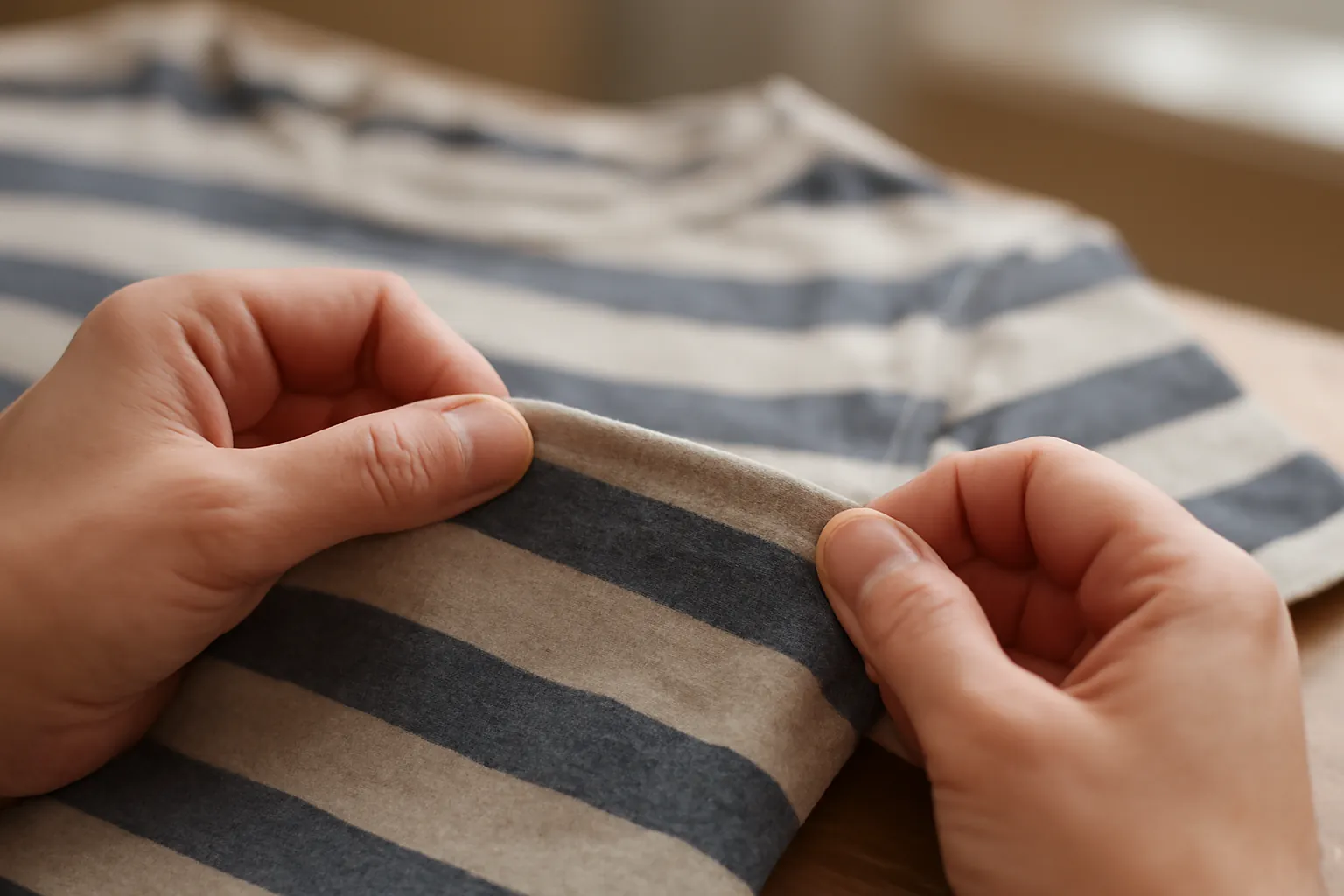
Knits cause more skipped stitches than any other fabric. Each time the needle pulls up, the stretchy fabric rises with it (sewers call it flagging), and the loop doesn't form where the hook expects it. Three fixes, in order:
- Switch to a ballpoint or stretch needle. Brother recommends a ballpoint needle for stretch fabrics. Stretch needles are built for elastic knits like swimwear and spandex blends.
- Lay thin paper under the fabric. This is straight from Brother's FAQ for thin or stretch fabrics. Tissue paper or a strip of tear-away stabilizer works; tear it off after sewing.
- Use a stretch stitch or a narrow zigzag rather than a long straight stitch, and don't pull the fabric through. Let the feed dogs do it.
Skipped stitches on thick fabric and seams
On denim, canvas and the crossed seams of a jeans hem, two things go wrong. A fine needle flexes as it pushes through the layers and bends away from the hook. And the presser foot tilts nose-up as it climbs the lump, which lifts the fabric while the loop is forming.
Use a jeans needle sized for the job (100/16 for most denim, 110/18 for heavy layers), slow right down over the bulk, and turn the handwheel by hand for the thickest two or three stitches. To keep the foot level, slide a hump jumper or a folded scrap of the same fabric under the back of the foot as you climb onto the seam. Hemming jeans often? Our guide to the best sewing machine for hemming pants covers machines that handle that side seam.
Notes by brand and machine type
Brother's skipped-stitch FAQ for its Innov-is machines lists seven causes: incorrect threading, the wrong needle or thread for the fabric, a turned, bent or dull needle, a needle installed incorrectly, a defective needle, lint under the needle plate, and thin or stretch fabric. That matches the order above. If your Brother is also showing a code on the screen, the Brother error code guide explains it.
Own a SINGER Heavy Duty? Our page on Singer Heavy Duty problems covers that model family, including skipped stitches and broken needles on heavy fabric.
On a serger, Brother's 1034D FAQ adds presser foot pressure and tension to the list, so the check order is similar, but rethread the loopers in their numbered order first.
On an embroidery machine, skips in dense designs usually mean a dull or wrong needle (use an embroidery needle, often 75/11) or not enough stabilizer. Thread nests on the back are a separate problem, covered in embroidery bird nesting.
The needles that fix most skipped stitches
Keep a few fresh needles of each type you sew with. They're cheap, and a fresh needle is the fix most of the time. All of these SCHMETZ cards hold 4.8 or 4.9 stars on Amazon, from 700 to 2,200+ ratings each.
- For woven cotton and everyday sewing: SCHMETZ universal needles, size 90/14.
- For T-shirts and jersey: SCHMETZ jersey ballpoint needles, size 80/12.
- For denim, canvas and jeans hems: SCHMETZ jeans and denim needles, size 110/18.
- For fine wovens and batiks: SCHMETZ Microtex sharp needles, size 90/14.
- For sewing through fusible, tape or spray baste: SCHMETZ nonstick needles, size 90/14.
Then a drop of sewing machine oil where your manual shows it, after you clean out the lint. Our sewing machine oil guide explains what to use.
When to stop and book a service
Book a service when a new needle of the right type, a full rethread, a different bobbin and a cleaned-out machine still skip on every fabric. It's more likely if the trouble started the moment the needle hit a pin or the machine jammed hard, because a jolt like that can knock the hook out of time. Retailer Sewing Machines Plus, in its skipped stitches guide, puts a typical US timing repair at $75 to $150 (as of October 13, 2026). Resetting timing means removing covers and adjusting the hook to a fraction of a millimeter, which is a job for a technician unless you've done it before.
Sources, checked October 13, 2026: Brother support FAQs for skipped stitches (Innov-is F580 and 1034D), Brother's stretch fabric and needle FAQs, and Sewing Machines Plus's skipped stitches guide. Needle details come from each product's Amazon listing. How we research · Affiliate disclosure