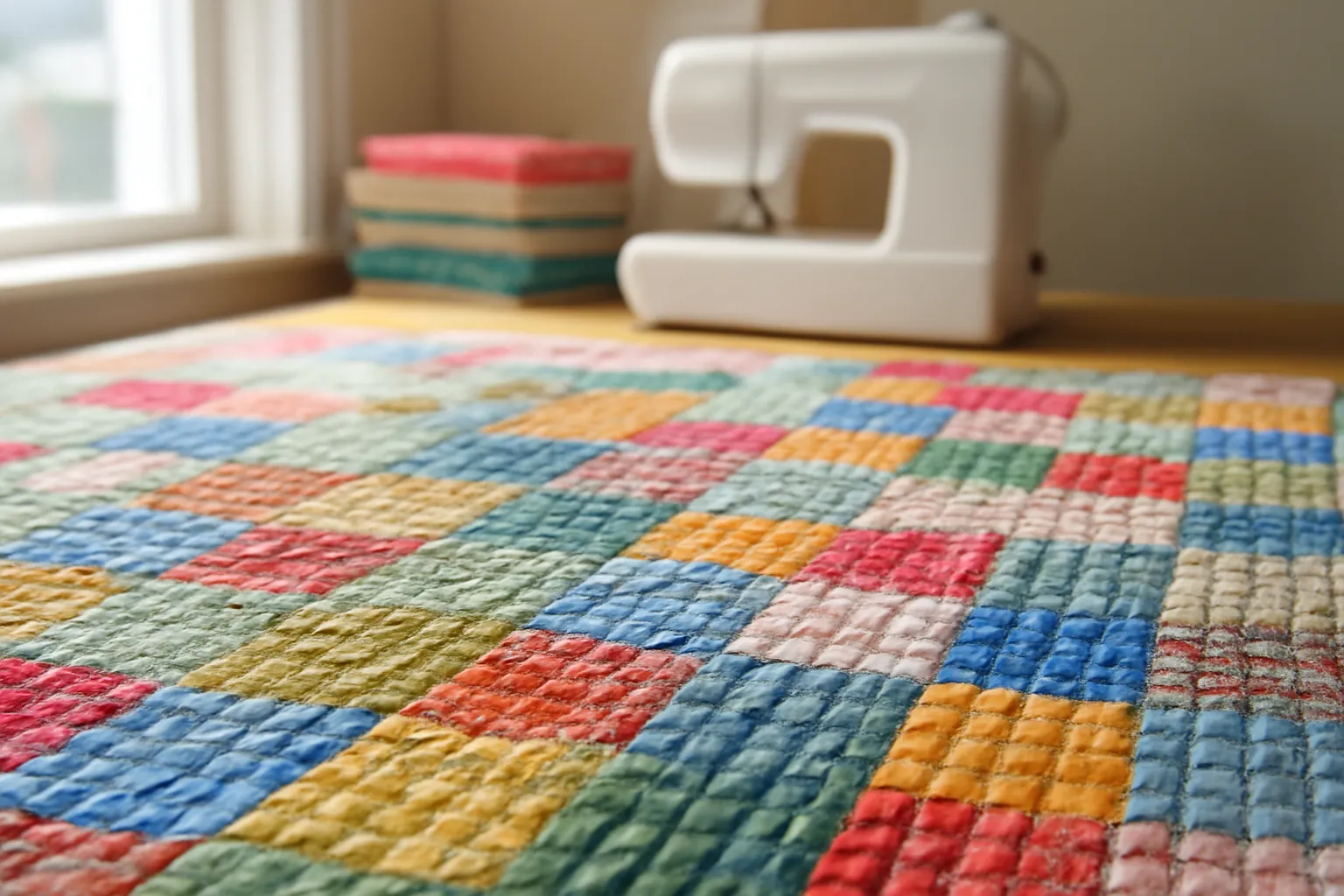
The Juki TL-2010Q is the machine to buy if you piece and quilt a lot and already own something that sews a zigzag. It does one stitch, straight, at up to 1,500 stitches per minute, with a push-button thread trimmer, a knee lifter and adjustable presser foot pressure. Those are the features that save time on a 200-seam quilt top. The catch is just as clear: no zigzag, no buttonholes and no free arm, so it can't be your only machine.
This is a spec review. Everything below comes from Juki America's product pages for the TL-2010Q, TL-2000Qi and TL-15, Juki's TL-18QVP page, a Juki dealer's spec sheet and the Amazon listings, all read on October 13, 2026. We didn't sew on a TL-2010Q for this review. How we research.
At a glance
| Buy it if | You piece and quilt often, sew bags or home decor, and want speed and an industrial-style stitch |
|---|---|
| Skip it if | It would be your only machine, or you sew garments with knits, buttonholes and sleeves |
| Juki status | Current model on jukihome.com, sold through authorized dealers |
| Owner rating | 4.5 stars from 628 ratings on the main Amazon listing (October 13, 2026) |
Juki TL-2010Q
The TL-2010Q is built like a scaled-down industrial machine: an aluminum die-cast body, a sub-tension unit on the thread path, and a trimmer that cuts both threads from a button on the machine or a rock of your heel on the pedal. Juki lists needle up/down, an automatic needle threader, drop feed for free-motion quilting and bright white LED lighting. The auxiliary table gives you a 23-inch-wide work area, and the knee lifter raises the foot to 12 mm so a thick quilt sandwich slides in without a fight.
- Typestraight-stitch lockstitch
- Speed200 to 1,500 spm slider
- Trimmerpush-button + pedal heel
- Foot lift12 mm by knee lifter
- Feetstandard, zipper, 1/4" quilting, even feed
- BobbinL
- Weight25.4 lb
Why it stands out
- 1,500 spm with a slider to cap the speed for free-motion work
- Push-button and pedal thread trimming
- Takes ordinary HA x 1 home needles
Think twice if
- It would be your only machine
- You need a free arm for sleeves, cuffs or pant legs
Verified specs
| Spec | TL-2010Q | Source |
|---|---|---|
| Stitch | Straight stitch only, single-needle lockstitch | Juki page |
| Max speed | 1,500 spm; slider sets 200 to 1,500 | Juki page |
| Max stitch length | 6 mm | Juki page |
| Needles | HA x 1 (130/705H) #7 to #18; HL x 5 #9 to #16 | Juki page |
| Bobbin | "L" style, side-loading, 4 in the box | Juki page |
| Thread trimmer | Automatic, needle and bobbin threads, by push-button or pedal | Juki page |
| Presser foot | Adjustable pressure; lifts to 12 mm with the knee lifter | Juki page |
| Throat (needle to arm) | 8.5 in wide x 6 in high | Juki Junkies dealer sheet |
| Work area with table | Up to 23 in; table 23 x 13 in | Juki page |
| Shank | High shank | Juki page |
| Feet included | Standard, zipper, 1/4" quilting, even feed | Juki page |
| Also in the box | Auxiliary table, knee lifter lever, oiler, cover, screwdrivers, needles, spool cap | Juki page |
| Size and weight | 17.75 x 9 x 8.5 in; 25.4 lb | Juki page |
How much room you get
For quilting, the number that matters is the space to the right of the needle. The TL-2010Q and its closest rival, Brother's PQ1600S, are within a fraction of an inch of each other, and both give noticeably more room than a compact home machine.
What it's good at
Piecing
Speed plus the trimmer is the whole pitch. Chain-piecing a quilt top means hundreds of seams, and each one ends with a button press instead of a snip. The sub-tension unit is there for the same reason it's on industrial machines: a consistent, even straight stitch. Add a 1/4" foot with a guide for accurate seams (see accessories below).
Free-motion and straight-line quilting
Drop the feed dogs with the switch, fit the 1/4" quilting foot, and use the slider to cap the speed so a heavy foot can't run away from you. For straight-line quilting, the even feed foot keeps the three layers moving together. Our free motion quilting for beginners guide covers the technique.
Bags, canvas and home decor
Juki's even feed foot description names leather and heavy materials, and adjustable foot pressure helps over thick seams. Buyers on resale listings report sewing Cordura and hemming denim with it. Fit the thick-fabric needle plate if you'll run 16 and 18 needles a lot.
Limits worth knowing before you buy
- Straight stitch only. No zigzag means no seam finishing, buttonholes or knits.
- Flat bed, no free arm. Hemming pants and setting sleeves are awkward.
- The bobbin loads from the side, industrial style. You can't watch it run low through a window the way you can on a drop-in machine, so wind several before a big project.
- High-shank feet. Your low-shank feet from a regular machine won't fit.
- Some owners report fussiness. Commenters on The Seasoned Homemaker's long-running review mention adjusting tension for different threads, the trimmer leaving short tails, and thread breaks with some brands. That reviewer also found the older model's light too narrow; Juki's current page lists bright white LED lighting.
Thread trouble on a TL is usually threading or tension, not the machine. Our sewing machine tension problems guide covers the check order, and these machines like a drop of oil in the right places: see which sewing machine oil to use.
TL-2010Q vs TL-2000Qi, TL-15 and TL-18QVP
| Model | Trimmer | Speed slider | Feet in the box | Extra |
|---|---|---|---|---|
| TL-2000Qi | Pedal heel | Not listed | Standard, even feed | Lowest price of the family; 4.8 stars from 900+ ratings |
| TL-2010Q | Button + pedal | 200 to 1,500 spm | Standard, zipper, 1/4" quilting, even feed | The sweet spot |
| TL-15 | Button + pedal | 200 to 1,500 spm | Adds open-toe quilting feet and a quilt guide | Needles to #16; dealer-sold |
| TL-18QVP | Button + pedal | 200 to 1,500 spm | Check Juki's accessory list | Float foot (0 to 2 mm), 4-step light |
If you'd use the speed slider (most free-motion quilters do), the TL-2010Q is worth the step up from the TL-2000Qi. The TL-15 is mostly a bigger accessory box. The TL-18QVP's float foot is for velvet and knits that stretch under a pressing foot, which is a garment-maker's concern more than a quilter's.
TL-2010Q vs Brother PQ1600S and Janome HD9
| Spec | Juki TL-2010Q | Brother PQ1600S | Janome HD9 |
|---|---|---|---|
| Max speed | 1,500 spm | 1,500 spm | 1,600 spm |
| Thread cutter | Button + pedal | Push-button | Automatic |
| Workspace | 8.5 x 6 in (dealer) | 8.7 x 5.7 in; 11.1 x 23.3 in table | Check listing |
| Needles | HA x 1 home needles | Check listing | Industrial HL x 5 |
| Other | Knee lifter, sub-tension | 4-level feed dog adjustment, programmable needle stop | Up to 11 lb foot pressure, bobbins hold 40% more |
| Amazon owner rating | 4.5 (628) | 4.0 (49) | 4.6 (6) |
| Buy | Check price | Check price | Check price |
The PQ1600S's adjustable feed dog height is a real plus for fabrics that don't feed evenly, but its owner score is lower and based on far fewer ratings. The HD9 is faster on paper and holds more bobbin thread, yet it takes industrial HL x 5 needles only and has very few owner reviews so far. The TL-2010Q has the biggest owner base of the three and the easiest needles to find.
Add these to the order
- Juki TL Series metal bobbins (5-pack), or SewNote's 10-pack made for the TL series. Wind several before a big quilt.
- The Juki 1/4" seam foot with a metal guide, a high-shank screw-on foot for accurate piecing.
- The Juki hinged zipper foot for TL machines, rated 4.9 stars, if you sew bags.
- The thick-fabric needle plate (genuine Juki part A9839-090-BA0) for heavy needles.
A sturdy table matters more on a 25-pound machine running at 1,500 spm. Our best sewing table guide covers flush-mount options.
Should you buy it?
Yes, if it's joining a machine that already does zigzag and buttonholes, and you piece or quilt every week. The speed slider, push-button trimmer and knee lifter are the features you'll touch on every seam, and they're exactly what the cheaper TL-2000Qi leaves out. If you want one Juki for everything, read our best Juki sewing machine guide, and if you're thinking about quilting bed-size quilts on a frame, compare it with a true long arm quilting machine first.
Specs come from Juki America's TL-2010Q, TL-2000Qi and TL-15 pages on jukihome.com, the TL-18QVP page on jukiquilting.com, the Juki Junkies spec sheet (throat), and the Amazon listings, checked October 13, 2026. Prices change often, so the buttons show the current price on Amazon. How we research · Affiliate disclosure