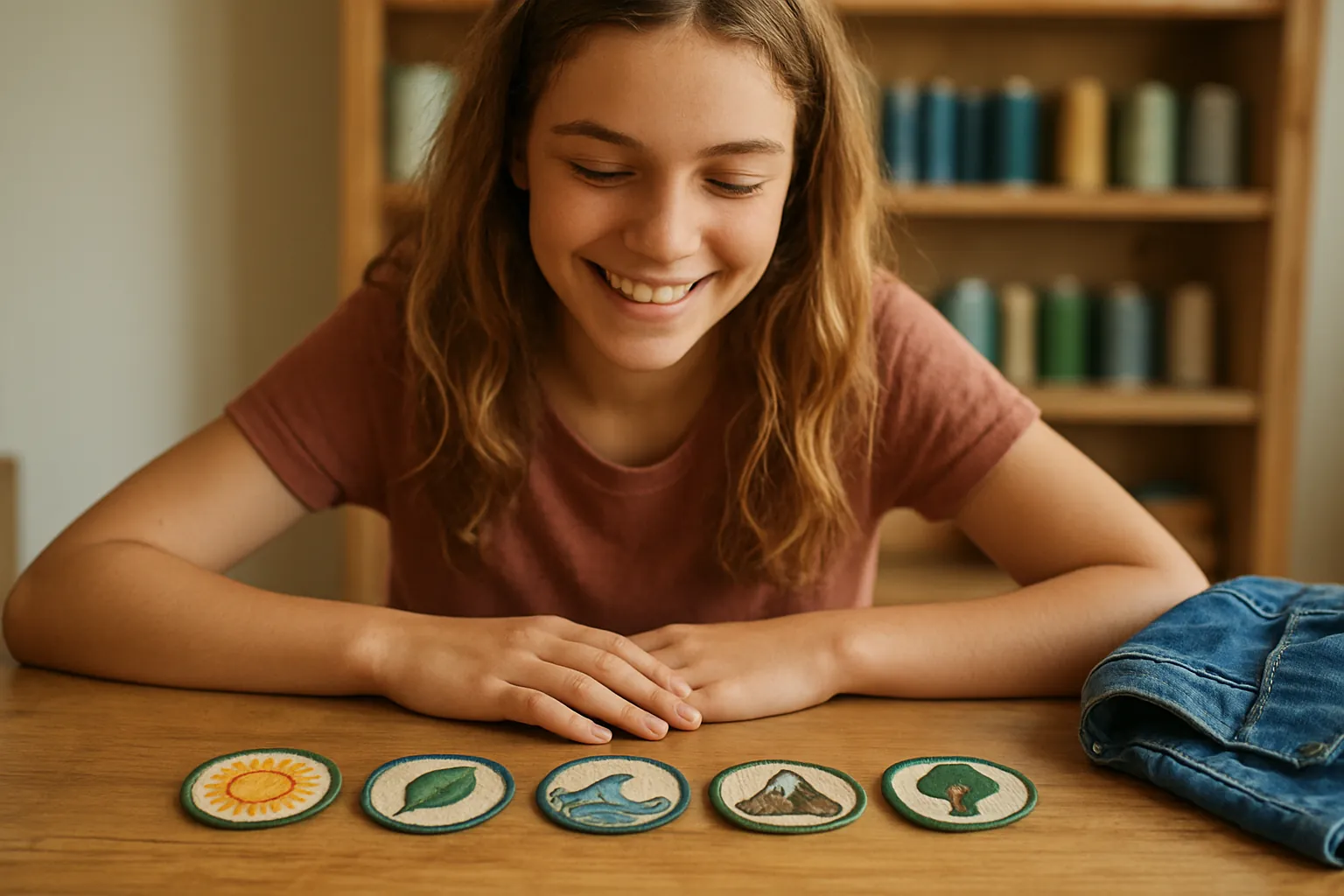
Buy the Brother PE800 if you want to make patches at home: its 5 x 7 inch field fits almost any hat, backpack or jacket-front patch, and it's the most-rated 5 x 7 embroidery-only machine in our Amazon search. Get the Brother SE700 instead if you also want to sew the patches onto clothes with the same machine, and accept that its 4 x 4 inch field caps patches at about 4 inches across. Patch making is about the hoop size, a firm stabilizer and the stitch order. The design count on the box hardly matters.
Quick picks
| Best for most patch makers | Brother PE800 | Amazon |
|---|---|---|
| Best for multi-color patches | Brother PE900 | Amazon |
| Best if you also sew patches on | Brother SE700 | Amazon |
| Best budget for small patches | Brother PE535 | Amazon |
| Best 5 x 7 combo | Brother SE2000 | Amazon |
| Best for big back patches | Poolin EOC06 | Amazon |
How we picked these machines
We started with the home embroidery machines sold on Amazon US and sorted them by demand and owner ratings on October 13, 2026. The Brother SE700 ranked #1 in Amazon's Embroidery Machines category, with 1,000+ bought in the past month. The PE800 and PE535 have 2,700+ and 1,700+ ratings. We dropped machines with weak or thin ratings, including a 10-needle commercial machine averaging 2.6 stars.
Then we scored them for patch work: embroidery field size first, then the ability to import your own designs (USB or wireless), then features that save time on multi-color designs like color sorting and jump-stitch trimming. Every spec comes from Brother's or the maker's Amazon listing.
This is a spec review. We compared listings and read owner feedback and patch tutorials; we did not stitch patches on every machine. How we research.
Patch size decides the machine
The embroidery field is the largest area the machine can stitch in one hooping, and a patch has to fit inside it, satin border and all. This is the number to buy on.
| Embroidery field | Largest patch, border included | Good for | Our picks |
|---|---|---|---|
| 4 x 4 in | About 4 in across | Name tags, round badges, hat and backpack patches, morale patches | Brother PE535, Brother SE700 |
| 5 x 7 in | About 5 x 7 in | Jacket chest patches, shields, most club and scout patches | Brother PE800, Brother PE900, Brother SE2000 |
| Large single-needle | Up to about 7.9 x 11 in | Jacket back patches | Poolin EOC06 |
| Multi-needle | Up to about 30 x 20 cm on a 6-needle like the PR680W | Back patches and selling in volume | See the selling section below |
A few small patches can share one hooping. On a 5 x 7 field, two or three 2-inch patches fit side by side, which halves the hooping and stabilizer per patch. Our hoop sizes explainer shows what fits in each field.
The 6 best embroidery machines for patches
Brother PE800
The 5 x 7 field is the sweet spot for patches: big enough for a jacket or hat patch, small enough that the machine stays affordable. The USB port matters more than the 138 built-in designs, because most patches are your own art or a design you've bought, and you'll load it from a USB stick. Eleven fonts cover name patches and lettering.
With more than 2,700 Amazon ratings at 4.5 stars, the PE800 has a deep owner base and plenty of patch tutorials written on it. It's embroidery-only, so you'll need a sewing machine to attach patches.
- Field5 x 7 in
- Designs138 built-in
- Fonts11
- ImportUSB port
- Screen3.2 in color touchscreen
- Typeembroidery only
Why it stands out
- 5 x 7 field fits most patch sizes
- USB import for your own patch designs
- 2,700+ owner ratings
Think twice if
- You want to stitch from your phone or skip trimming jump stitches by hand: see the PE900
Brother PE900
Patches are often several small color areas, and that's where the PE900 earns its price over the PE800. Brother's Advanced Color Sort reorders a multi-color design so the machine makes fewer color changes, and jump stitch trimming cuts the threads that run between areas of the same color. On a patch with lettering and a border, both save real time and fiddly trimming.
It adds wireless transfer from a PC and the Artspira app, and a 3.7-inch touchscreen for resizing and combining designs. Our full PE900 review covers it in depth.
- Field5 x 7 in
- Needle to arm7.4 in
- Designs193 built-in
- ImportWLAN, USB, Artspira app
- Time saversAdvanced Color Sort, jump stitch trimming
- Typeembroidery only
Why it stands out
- Color sort reduces color changes
- Automatic jump stitch trimming
- Wireless and USB design transfer
Think twice if
- You only make single-color or two-color patches; the PE800 does those for less
Brother SE700
The only machine here that sews as well as embroiders, which means one machine can make a patch in the morning and stitch it onto a jacket in the afternoon. It ranked #1 in Amazon's Embroidery Machines category on our check, with 1,000+ bought last month.
The catch is the 4 x 4 field. That's plenty for hat patches, name tags and round badges, and too small for anything bigger. If your patches will mostly be small and you want one machine, it's the pick. Our SE700 vs PE545 comparison covers the embroidery-only alternative.
- Field4 x 4 in
- Designs135 built-in
- Sewing stitches103
- Feet8 included
- ImportWLAN, USB
- Screen3.7 in touchscreen
Why it stands out
- Sews and embroiders in one machine
- 8 sewing feet included
- Wireless design transfer
Think twice if
- You want patches bigger than about 4 inches
Brother PE535
The cheapest way into patch making that still imports your own designs by USB. A 4 x 4 field makes name patches, round badges and most hat patches. With 1,700+ ratings, it's a well-known first embroidery machine. If you outgrow the field, the PE800 is the step up and works the same way.
- Field4 x 4 in
- Designs80 built-in
- Fonts9
- ImportUSB port
- Screen3.2 in color touchscreen
- Typeembroidery only
Why it stands out
- Lowest price of our picks
- USB import for custom patch designs
- Simple to learn
Think twice if
- You'll want jacket-size patches soon; buy the 5 x 7 PE800 from the start
Brother SE2000
The SE2000 combines the PE900's 5 x 7 field and time-saving features with a full sewing machine. That makes it the one-machine answer if you want big patches and want to sew them on. Its Amazon rating (4.0 from 205 ratings) is lower than the rest of our picks, so read recent reviews before buying.
- Field5 x 7 in
- Designs190+ built-in
- Sewing stitches241
- Feet8 included
- Time saversAdvanced Color Sort, jump stitch trimming
- ImportWLAN, USB
Why it stands out
- 5 x 7 field plus 241 sewing stitches
- Color sort and jump stitch trimming
- One machine to make and attach patches
Think twice if
- You already own a good sewing machine; the PE900 does the embroidery part for less
Poolin EOC06
The one single-needle home machine here big enough for a jacket back patch in one hooping: its largest hoop is 7.9 x 11 inches. It comes with four hoops, and Poolin includes thread, bobbins and stabilizer to start. Two things to know before buying. It reads DST and DSB embroidery files rather than Brother's PES format, so check your design source exports those. And its Amazon rating, 4.0 from about 390 ratings, is the lowest of our picks, so read the recent reviews.
- Field11 x 7.9 in max
- Hoopstwo 5.5 x 5.5, one 7.9 x 7.9, one 7.9 x 11 in
- Designs200 built-in
- FilesDST or DSB via USB or WLAN
- Screen7 in touchscreen
Why it stands out
- 11 x 7.9 inch field for large patches
- Four hoops included
- USB and wireless file transfer
Think twice if
- Your designs are in Brother's PES format only
- You want Brother's dealer and support network
Side-by-side comparison
| Machine | Field | Sews too | Color sort / jump trim | Design import | Amazon ratings |
|---|---|---|---|---|---|
| Brother PE800 | 5 x 7 in | No | Check listing | USB | 2,700+ |
| Brother PE900 | 5 x 7 in | No | Yes | WLAN, USB | 300 |
| Brother SE700 | 4 x 4 in | Yes | Check listing | WLAN, USB | 1,000+ |
| Brother PE535 | 4 x 4 in | No | Check listing | USB | 1,700+ |
| Brother SE2000 | 5 x 7 in | Yes | Yes | WLAN, USB | 205 |
| Poolin EOC06 | 11 x 7.9 in | No | Check listing | WLAN, USB (DST/DSB) | 393 |
"Check listing" means the Amazon listing doesn't mention the feature. Ratings as of October 13, 2026.
How a machine-embroidered patch is made
The method below follows the patch tutorials at Sewing Machine Fun and SewGuide. The key idea: the satin border is always stitched last, so it covers the trimmed edge of the twill.
- Hoop a firm stabilizer. Sewing Machine Fun recommends a heavy, film-type water-soluble stabilizer for a clean edge; a cut-away also works if you'll trim it after.
- Stitch the placement line, lay the twill over it, then stitch the tack-down line that holds the twill in place.
- Stitch the inside of the design: fills, details, lettering.
- Stop before the border. Take the hoop off the machine (don't unhoop the fabric) and trim the twill close to the tack-down line.
- Stitch the satin border. It needs to be wide enough to cover the cut edge: Sewing Machine Fun says at least 3 mm.
- Remove the patch, clear away the stabilizer, and add a backing if you want iron-on.
Check the file format, too. Brother home machines read Brother's PES format, while the Poolin EOC06 takes DST or DSB files. Buy patch designs in your machine's format, or use digitizing software that exports it.
Satin borders are dense, so if you're new to digitizing or editing designs, start with patch designs sold as "patch" or "in-the-hoop" files, which are set up with this stitch order. Our machine embroidery cheat sheet has needle and thread settings for dense stitching.
Patch supplies worth buying
- Twill: dime Poly Patch Twill, Uniform colors is 100% polyester in eight 9 x 24 inch sheets, and the listing says it works with Fuse & Seal backing.
- Stabilizer: HBI cut-away stabilizer, 2.5 oz on a 12 inch x 50 yard roll; the listing names patches among its uses. Our stabilizer guide explains cut-away vs wash-away.
- Iron-on backing: HeatnBond UltraHold iron-on adhesive, a permanent, heat-activated double-sided adhesive on a paper backing, with nearly 9,600 ratings.
How long patches take, and selling them
Sewing Machine Fun timed patches on a single-needle Brother: a 3-inch patch took about 20 to 30 minutes at 50% fill and 50 to 60 minutes at full fill. That turns into simple math for anyone thinking of selling:
| 3-inch patch, single needle | Minutes each (their timing) | Patches in a 4-hour session |
|---|---|---|
| About half filled (twill shows) | 20 to 30 | About 8 to 12 |
| Fully filled | 50 to 60 | About 4 to 5 |
Session counts are our arithmetic from those times and leave out hooping, trimming and backing, so real output is lower. The two easy wins: design patches with less fill (let the twill color do the work), and put several small patches in one hooping.
The next big jump comes from a multi-needle machine, which holds several colors at once so it doesn't stop for you to rethread. Brother's Entrepreneur PR680W is a 6-needle machine with an embroidery area up to 30 x 20 cm, up to 1,000 stitches per minute and a cap kit, per its listing, though it has almost no Amazon ratings. Our embroidery machine for small business guide covers multi-needle options, and embroidery machines for hats and shirts covers stitching directly on garments.
Sewing patches onto clothes with a sewing machine
A lot of people searching for a "sewing machine for patches" want to attach them, not make them. Any sturdy home sewing machine can. A few things make it easy:
- A free arm, so you can slide a sleeve or pant leg over it instead of opening a seam.
- A jeans needle (100/16) for denim jackets, or a leather needle for leather vests.
- A straight stitch right at the inner edge of the border, or a narrow zigzag that just catches the edge. An edge-stitch or zipper foot helps you sew tight against a thick border; our presser feet guide shows which.
- Fuse iron-on patches first, then stitch around them. The stitching holds the patch if the adhesive lets go in the wash.
For quick repairs, SINGER iron-on twill patches (2 x 3 inches, 10 in dark work colors) cover holes in work pants and uniforms. For thick denim and canvas, see our best heavy-duty sewing machine guide.
Which one to buy
For patches alone, buy the Brother PE800: 5 x 7 inches covers nearly every patch, and USB import is all you need for your own designs. Step up to the PE900 if your patches have lots of colors. Want one machine that makes small patches and sews them on? The Brother SE700. New to embroidery altogether? Start with our best embroidery machine for beginners.
Specs and features come from each manufacturer's Amazon listing, checked October 13, 2026. Patch method and timings: Sewing Machine Fun's and SewGuide's patch tutorials. Prices change often, so the buttons above show the current price on Amazon. How we research · Affiliate disclosure