
Set the width for how far the needle swings and the length for how far the fabric moves between swings, then test on a scrap. To finish a raw edge, start at width 3 to 4 mm and length 2 to 3 mm. For a knit seam, go narrow: width 1 to 2 mm, length 2 to 2.5 mm. For satin stitch around an appliqué, keep the width and shorten the length until the stitches touch. The chart below covers the rest.
Width and length, in one picture
Most machines label both dials in millimeters. On Brother's XM2701, for example, the zigzag runs from width 0 to 5 mm and length "F" to 4 mm, and the manual says the numbers on the stitch length dial are millimeters. Width 0 is a straight stitch. "F" (or 0.3 to 0.5 on other machines) is a very short length for satin stitch.
Zigzag settings chart by job
These are starting points, in millimeters, for a 5 mm machine. On a 7 mm machine you can go wider for edge finishing and satin stitch, but the knit-seam settings stay the same. Always test on a scrap of the real fabric with the real thread.
| Job | Stitch | Width | Length | Notes |
|---|---|---|---|---|
| Finish a raw seam edge | Zigzag | 3 to 4 | 2 to 3 | Needle swings just off the edge on the right; overcast foot helps |
| Edge of thin or loose fabric | Three-step zigzag | 4 to 5 | 1 to 1.5 | Lies flat where a plain zigzag tunnels |
| Seam in knit fabric | Narrow zigzag | 1 to 2 | 2 to 2.5 | Ballpoint or stretch needle; seam stretches with the fabric |
| Sew on elastic | Three-step zigzag or Brother's Elastic Stitch | 3 to 5 | F to 2.5 (XM2701) | Stretch the elastic in front of and behind the foot as you sew |
| Mend a tear | Three-step zigzag or Elastic Stitch | 4 to 5 | Short, about 1 | Patch fabric underneath, sew along the tear |
| Satin stitch, appliqué edges | Zigzag | 2 to 4 | F to 1 (XM2701) | Stitches touch; tear-away stabilizer underneath |
| Buttonhole sides (manual buttonhole) | Zigzag | 2 to 3 | 0.3 to 0.8 | Bar tacks at each end at width 4 to 5 |
| Heavy stretch fabric (sweatshirt fleece, swim) | Triple zigzag stretch | 3 to 5 | Fixed 2.5 (XM2701) | Also a decorative topstitch |
Stitch ranges marked XM2701 are from Brother's XM2701 operation manual. The seam finish and knit seam numbers, and the buttonhole numbers, follow Fabrics-store's stitch settings guide. Three-step and mending settings are common starting points, not maker specs.
How to sew a zigzag, step by step
- Fit the zigzag foot. On Brother machines it's foot "J", the one that comes mounted. A straight-stitch foot or a narrow single-hole needle plate will be hit by the needle.
- Select the zigzag stitch and set the width and length from the chart.
- Turn the handwheel toward you through one full swing to make sure the needle clears the foot.
- Sew a few straight stitches first. Brother's XM2701 manual recommends straight stitch at the beginning and end of a zigzag as reinforcement, rather than reverse zigzag.
- Sew at a steady medium speed and let the feed dogs move the fabric. Guide it; don't pull it, especially on knits, or the seam ends up wavy.
- For an edge finish, line the fabric up so the right swing of the needle lands just off the raw edge.
Thread matters more on a zigzag than a straight stitch, since there's twice as much of it on the surface. Use polyester all-purpose thread on knits; our sewing machine thread guide explains why cotton snaps there.
Zigzag on stretch fabric
A straight stitch has no give, so when a knit stretches, the thread breaks. A narrow zigzag fixes that because the thread can open out as the fabric stretches. Keep it narrow (1 to 2 mm) for seams, or the seam looks gappy from the right side.
The needle is half the fix. A ballpoint needle pushes between the knit's loops instead of piercing them, which prevents holes and skipped stitches. Schmetz's ball point jersey needles in 70/10, 80/12 and 90/14 cover most knits. For swimwear and other very stretchy fabric, use a Schmetz stretch needle, 75/11; the listing says its medium ball point and specially shaped eye and scarf are designed to prevent skipped stitches in highly elastic knitwear. More on sizes in our needle size chart.
For heavier stretch fabric, the triple zigzag stretch stitch is stronger. Brother's XM2701 manual lists it for anywhere a zigzag would be used on heavyweight stretch fabrics.
When a zigzag tunnels or puckers
Tunneling is the ridge that forms when a wide zigzag draws the fabric up under the stitches. It's the most common zigzag complaint and it has five fixes, roughly in order of effort:
- Narrow the width a step. A 5 mm zigzag on lightweight cotton tunnels more than a 3 mm one.
- Loosen the top tension slightly. The top thread should just show on the underside at each point, not be pulled flat.
- Switch to a three-step zigzag. Three short stitches per swing pull less than one long one.
- Use an overcast foot, which has a small bar or pin the thread wraps over at the edge, so the fabric can't draw in.
- For satin stitch and appliqué on thin fabric, put a strip of tear-away stabilizer underneath and pull it off afterward.
Another trick for flimsy fabric: zigzag about a quarter inch in from the raw edge, then trim close to the stitches. The stitching never wraps a loose edge, so it can't roll it.
The overcast foot, and when a serger is better
An overcast foot is the cheapest upgrade for zigzag edge finishing. The most-bought one in our October 15 search, the YEQIN snap-on overcast foot, has 608 ratings, and its listing says it's an overedge foot with a guide that fits low-shank snap-on machines (some Singers need a low-shank adapter). Brother and Baby Lock owners can also look at the HONEYSEW overcast foot G, whose listing gives Brother's part number XC3098051 and lists Baby Lock models by group. Set the width so the needle clears the foot's pin on both swings: turn the handwheel by hand before you sew. Our presser feet guide shows how to check your shank.
| Tool | Edge finish quality | Knit seams | Cost | Choose it when |
|---|---|---|---|---|
| Plain zigzag, standard foot | Fine on medium fabric, tunnels on thin | Yes, narrow | Nothing extra | You sew a few garments a year |
| Zigzag with overcast foot | Flatter, neater edge | Yes | A few dollars | You finish seams often and don't want a second machine |
| Serger | Trims and wraps the edge in one pass | Best: sews and trims in one pass | A second machine | You sew knits or clothes every week |
| Coverstitch | Not for edges | Hems only, the twin-needle look of ready-to-wear | A third machine | You hem a lot of knit tops and leggings |
If you're weighing the jump, our sewing machine vs serger guide covers what a serger adds, and best coverstitch machine covers knit hems.
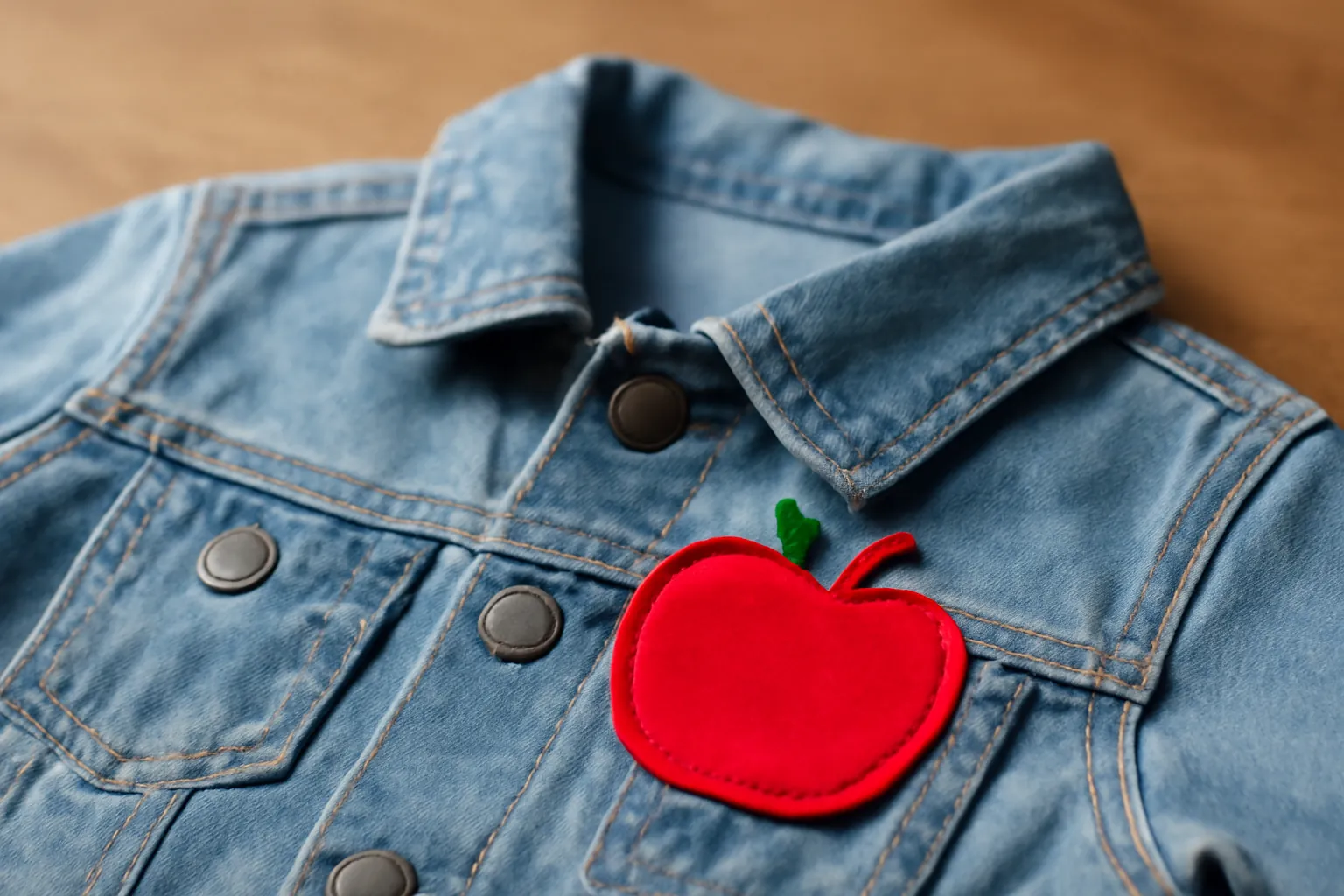
Satin stitch and appliqué
Satin stitch is a zigzag so short the stitches lie side by side. On the XM2701, Brother says to set the zigzag length in the "F" to "1" range and the width anywhere from 0 to 5. The exact length depends on the fabric and thread, so the manual says to test on a scrap and watch how the fabric feeds. Too short and the fabric stalls and the thread piles up; too long and you see gaps.
For appliqué, Brother's manual says to baste the cut shape to the fabric and sew carefully around its edge with a zigzag. Let the right swing of the needle land just off the appliqué into the background fabric, and pivot with the needle down on the outside of curves. Use stabilizer underneath unless the background fabric is heavy.
Which sewing machines do zigzag
Nearly every home machine sold today does, so if you're searching for a "sewing machine for zigzag stitch", the real question is the maximum width. Brother's spec data lists 5 mm for the XM2701 and 7 mm for the CS7000X. A 5 mm zigzag handles every job in the chart above; 7 mm gives you wider satin stitch and decorative stitches. Straight-stitch-only machines (industrial straight stitchers, and some vintage models like the Singer Featherweight 221) can't zigzag at all.
On most machines the zigzag icon is the plain W-shaped line on the stitch dial or panel; the three-step version is a zigzag made of small dashes. Check the stitch chart in your manual if the symbols aren't obvious. Choosing a machine? Our beginner machine picks and our machines for making clothes compare current models.
Stitch ranges and appliqué steps from Brother's XM2701 Operation Manual (v03), downloaded October 15, 2026. Stitch widths from Brother's product specs. Needle and foot details from each Amazon listing, checked October 15, 2026. Prices change often, so the buttons show the current price on Amazon. How we research · Affiliate disclosure