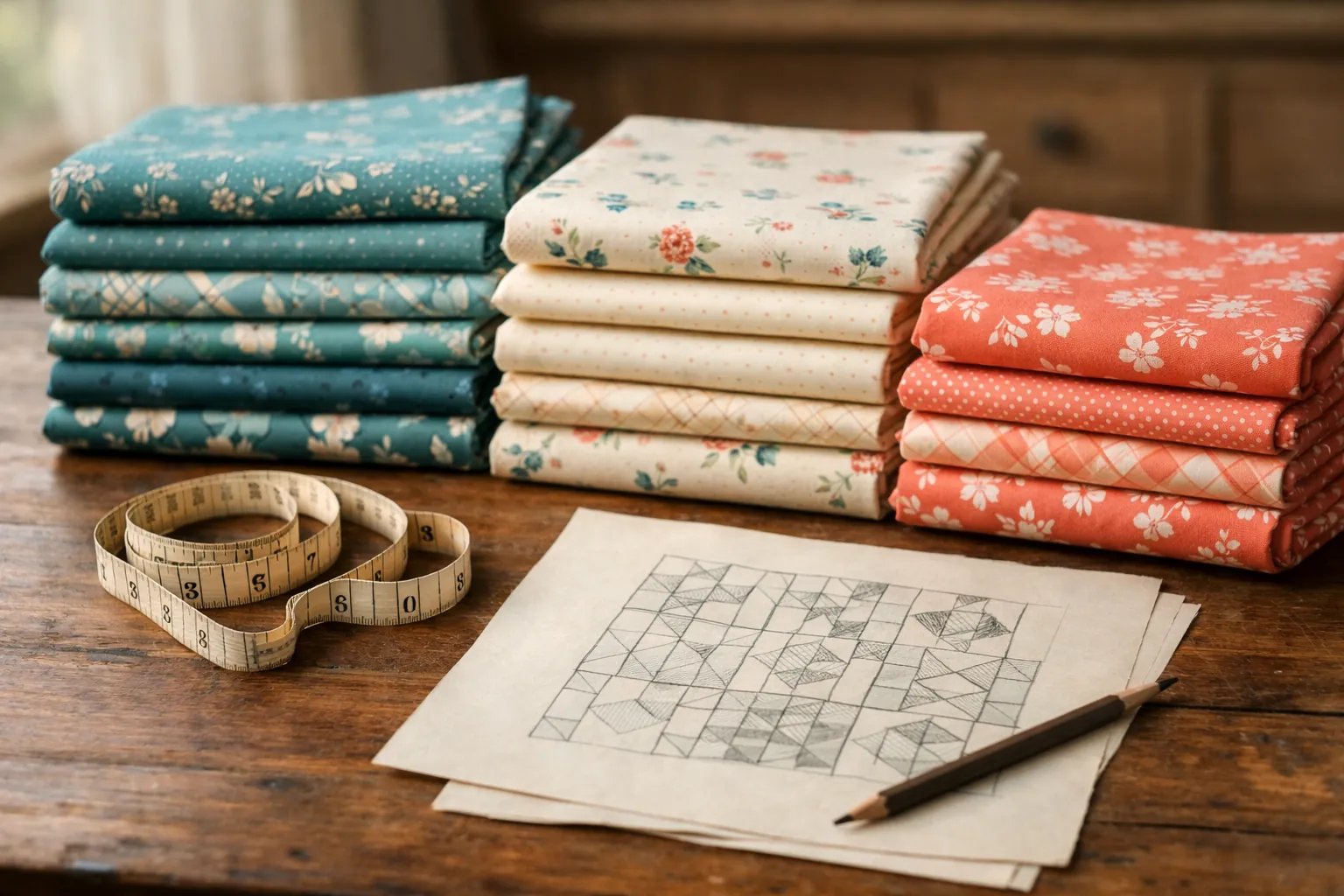
A 90 × 95 inch queen needs about 8¼ yards of 42 inch fabric for the backing, ¾ yard for binding and a king-size batting package. The top depends on the pattern: a top of plain 10 inch squares takes about 8¾ yards, so a simple queen comes to roughly 17 to 18 yards in all. Everything except the top can be calculated exactly from the quilt's size, and the table below does that for every common size.
Yardage by quilt size, everything but the top
All figures come from our quilt binding and backing calculator with its default settings: 42 inch quilting cotton with 40 inches usable, 4 inches of backing beyond the quilt on every side, 2.5 inch binding strips and 12 inches of overage. Sizes are Missouri Star's planning sizes, explained on our quilt size chart.
| Quilt (inches) | Backing, 42" fabric | Backing, 108" fabric | Binding | Batting piece |
|---|---|---|---|---|
| Crib 36 × 52 | 2½ yd (1 horizontal seam) | 1¼ yd | ⅜ yd | 44 × 60 (baby package) |
| Throw 50 × 65 | 3¼ yd (1 horizontal seam) | 1¾ yd | ½ yd | 58 × 73 (twin package) |
| Twin 68 × 86 | 5¼ yd (1 vertical seam) | 2¼ yd | ⅝ yd | 76 × 94 (full package) |
| Full 84 × 90 | 7¾ yd (2 horizontal seams) | 2¾ yd | ⅝ yd | 92 × 98 (king package) |
| Queen 90 × 95 | 8¼ yd (2 horizontal seams) | 2¾ yd | ¾ yd | 98 × 103 (king package) |
| King 108 × 95 | 8¾ yd (2 vertical seams) | 3¼ yd | ⅞ yd | 116 × 103 (king package) |
| Cal king 102 × 100 | 9 yd (2 vertical seams) | Too wide; piece it | ⅞ yd | 110 × 108 (king package) |
The seam direction matters more than people expect. Missouri Star's backing chart seams every size vertically, and our vertical figures match theirs exactly. Seaming the crib, throw, full and queen horizontally instead saves between ½ and a full yard. The calculator shows both so you can choose.
Batting packages are Warm & Natural's sizes from The Warm Company's product pages (baby 45 × 60, twin 72 × 90, full 90 × 96, queen 90 × 108, king 120 × 124). Note the queen: a 98 inch wide piece doesn't fit a 90 inch wide queen package, so a queen quilt with a normal margin needs a king batt.
Estimating fabric for the quilt top
The top is the one part no chart can answer, because a queen made of big squares and a queen made of tiny half-square triangles use very different amounts. If your pattern gives yardage, use it. If you're designing your own, this method works for any block that starts as a square or rectangle:
- Count the blocks: quilt width ÷ finished block size, times quilt length ÷ finished block size.
- Add the seam allowance to get the cut size: finished size + ½ inch for a ¼ inch seam on each side.
- Pieces per strip: 40 usable inches ÷ cut size, rounded down.
- Strips: number of pieces ÷ pieces per strip, rounded up.
- Fabric: strips × cut size, then ÷ 36 and round up to the next ⅛ yard.
Worked example: a queen of 10 inch squares
Nine squares across and ten down makes a 90 × 100 inch quilt, slightly longer than the 90 × 95 planning size, which suits a deeper mattress.
| Step | Math | Result |
|---|---|---|
| Blocks | 9 × 10 | 90 squares |
| Cut size | 10 + ½ | 10½ in squares |
| Per strip | 40 ÷ 10.5 = 3.8, round down | 3 squares |
| Strips | 90 ÷ 3 | 30 strips, 10½ in tall |
| Fabric | 30 × 10.5 = 315 in ÷ 36 | 8¾ yd |
The rest of that 90 × 100 quilt, from the calculator: backing 8¼ yards seamed horizontally (9 seamed vertically) or one 3 yard cut of 108 inch backing, binding ¾ yard (10 strips), and a 98 × 108 batting piece. Total with pieced backing: about 17¾ yards.
The same method for a 50 × 65 throw of 5 inch squares gives 130 squares cut at 5½ inches, 7 per strip, 19 strips and 3 yards. A 40 × 50 baby quilt of 5 inch squares needs 80 squares, 12 strips and 1⅞ yards.
When the estimate needs padding
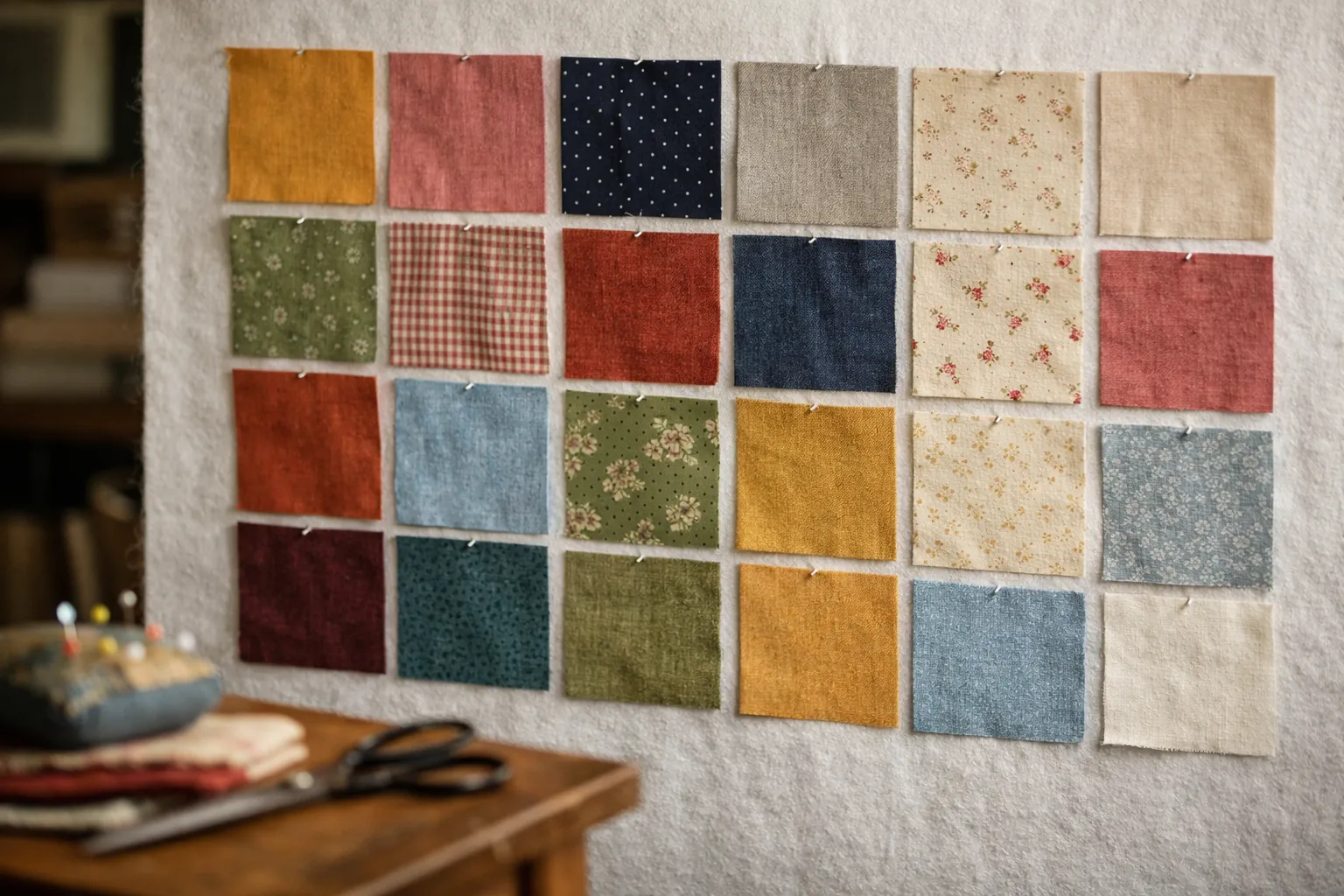
- Several fabrics: run the count per fabric and round each up separately. Rounding the total once undercounts.
- Directional prints: you may lose a few pieces per strip keeping the print upright.
- Prewashing: quilting cotton can shrink a little, so the usable width might drop below 40 inches. Measure after washing.
- Mistakes: buying a little extra of each fabric costs less than a second trip that finds the print sold out.
Pieced backing or 108 inch wide?
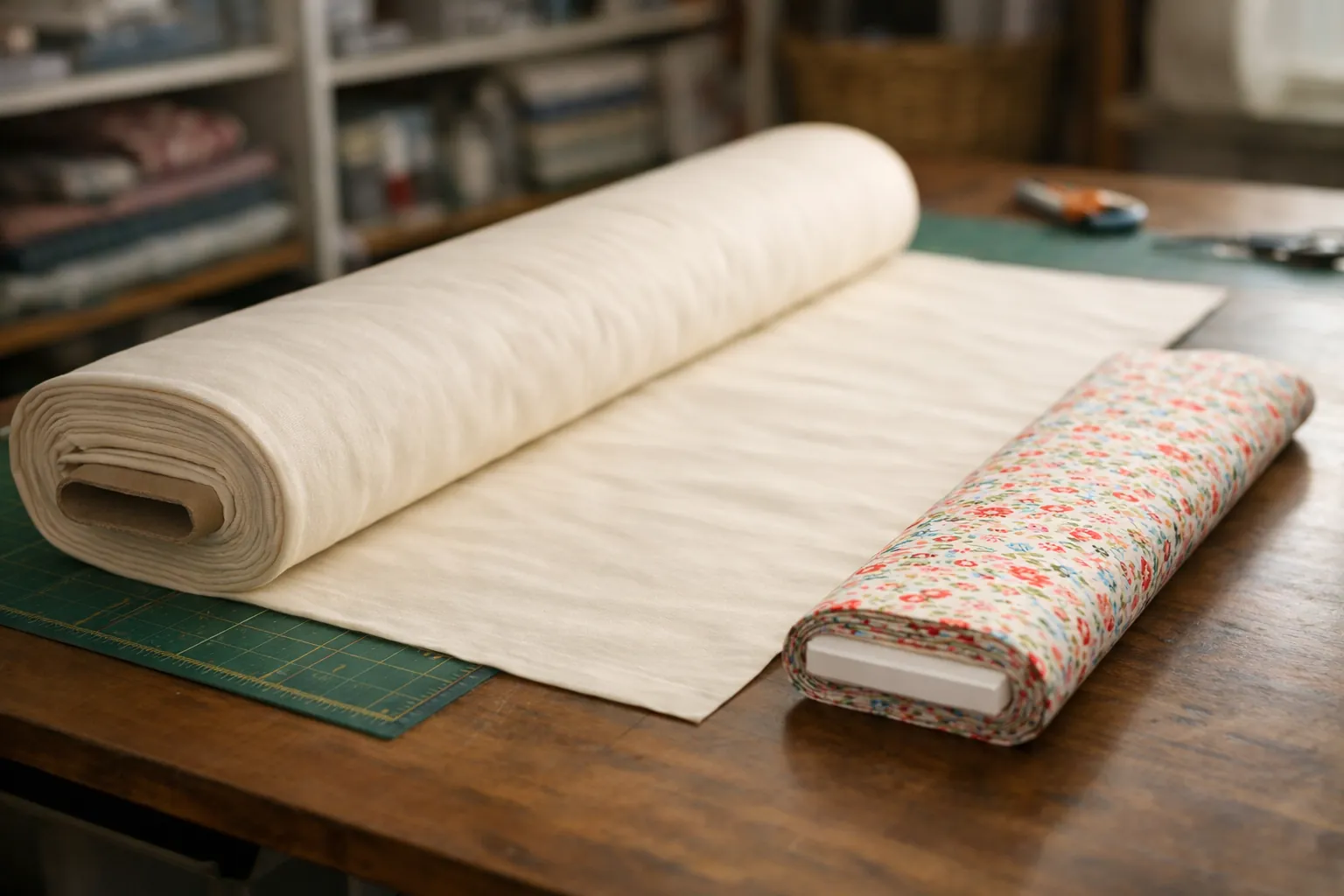
For anything twin size and up, wide backing is worth a look. A queen needs 8¼ yards of 42 inch fabric and two long seams, or one cut of 2¾ to 3 yards of 108 inch backing with no seams. Wide backing costs more per yard, so compare the total for your shop.
We assume 104 usable inches of a 108 inch backing, to allow for selvages and shrinkage. That's why the California king (110 inch wide backing) doesn't fit in one width either way and has to be pieced. For smaller quilts, standard yardage is usually the better buy, and a horizontal seam keeps it short. Quilting it on a frame yourself? Our long arm quilting machine guide covers how much throat and frame each quilt size needs.
Batting
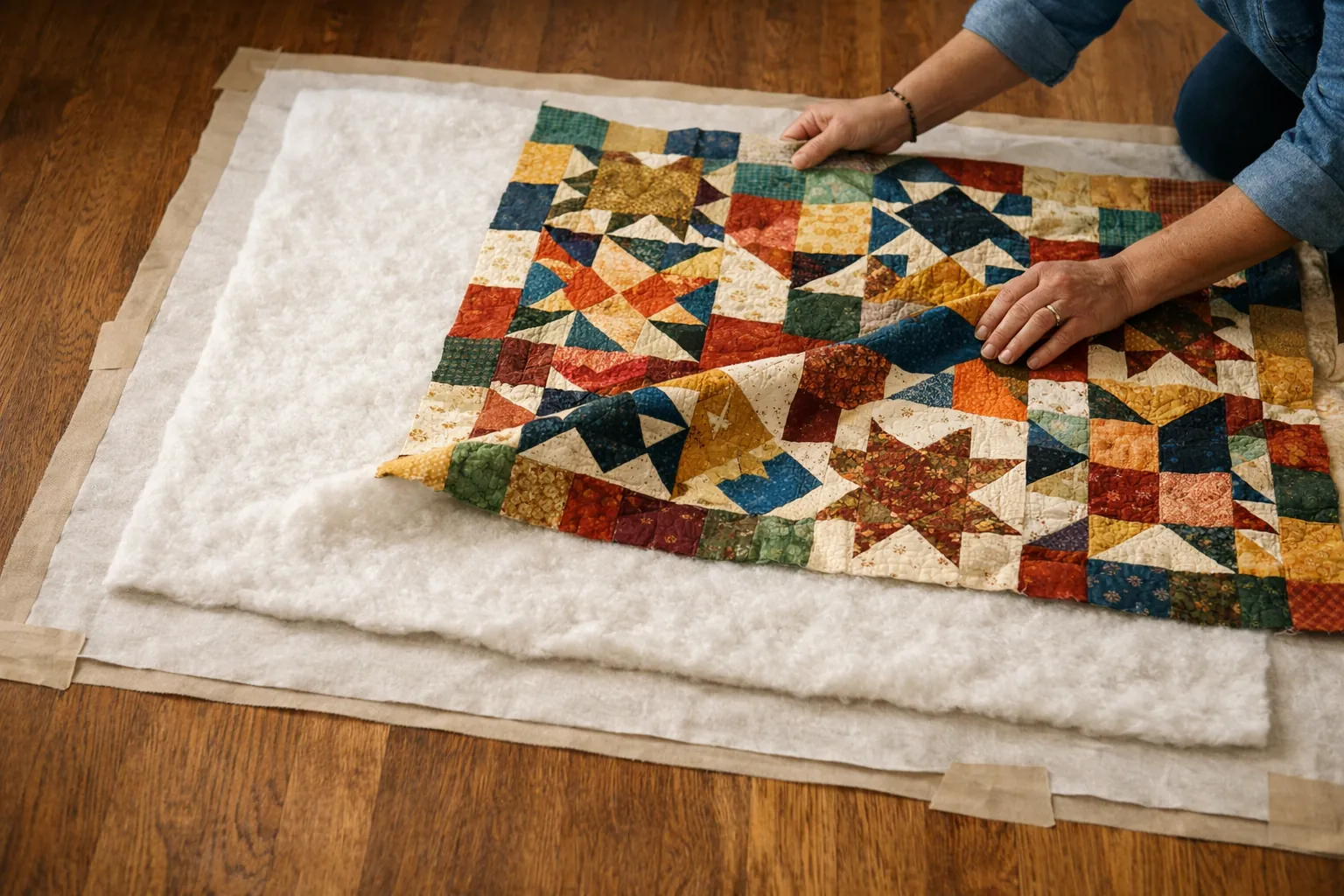
Batting should match the backing size, so it reaches past the top on every side while you quilt. Packaged batting is the easy route up to the size of the package. For a queen-size quilt with a normal margin that means a king package, or batting cut from a roll. The Warm Company says its Warm & Natural batting can be quilted up to 10 inches apart and shrinks about 3% in a first cold wash.
- Warm & Natural cotton batting, twin 72 × 90. Covers the backing for crib and throw quilts. It had 13,989 ratings on Amazon when we checked on October 3.
- Hobbs Heirloom 80/20 fusible batting, 90 × 108. A queen-size piece covers twin-size backings; note that this one is the fusible version.
Cutting tools
Most of the cutting for a squares quilt is long strips, so a long ruler and a sharp rotary cutter matter most: the Fiskars 6 × 24 inch quilting ruler and the Fiskars 45mm rotary cutter were both strong sellers when we checked. Our rotary cutter guide compares blade sizes and the mat to cut on. Once the top is pieced, quilting all three layers on a home machine is far easier with a walking foot; see which walking foot fits your Brother machine, or our picks for quilting machines.
Run your own numbers
Put your quilt's finished width and length into the calculator for everything except the top, then add the top using the five steps above. For binding at 2.25 inches and other widths, see how much binding for a quilt.
Sources, checked October 3, 2026: Missouri Star Quilt Co., "How to Calculate Quilt Backing Yardage" (method and chart); On Point Quilter (binding method); The Warm Company, Warm & Natural product pages (package sizes, quilting distance, shrinkage). Table values generated by our calculator. Product links show the current price on Amazon. How we research · Affiliate disclosure