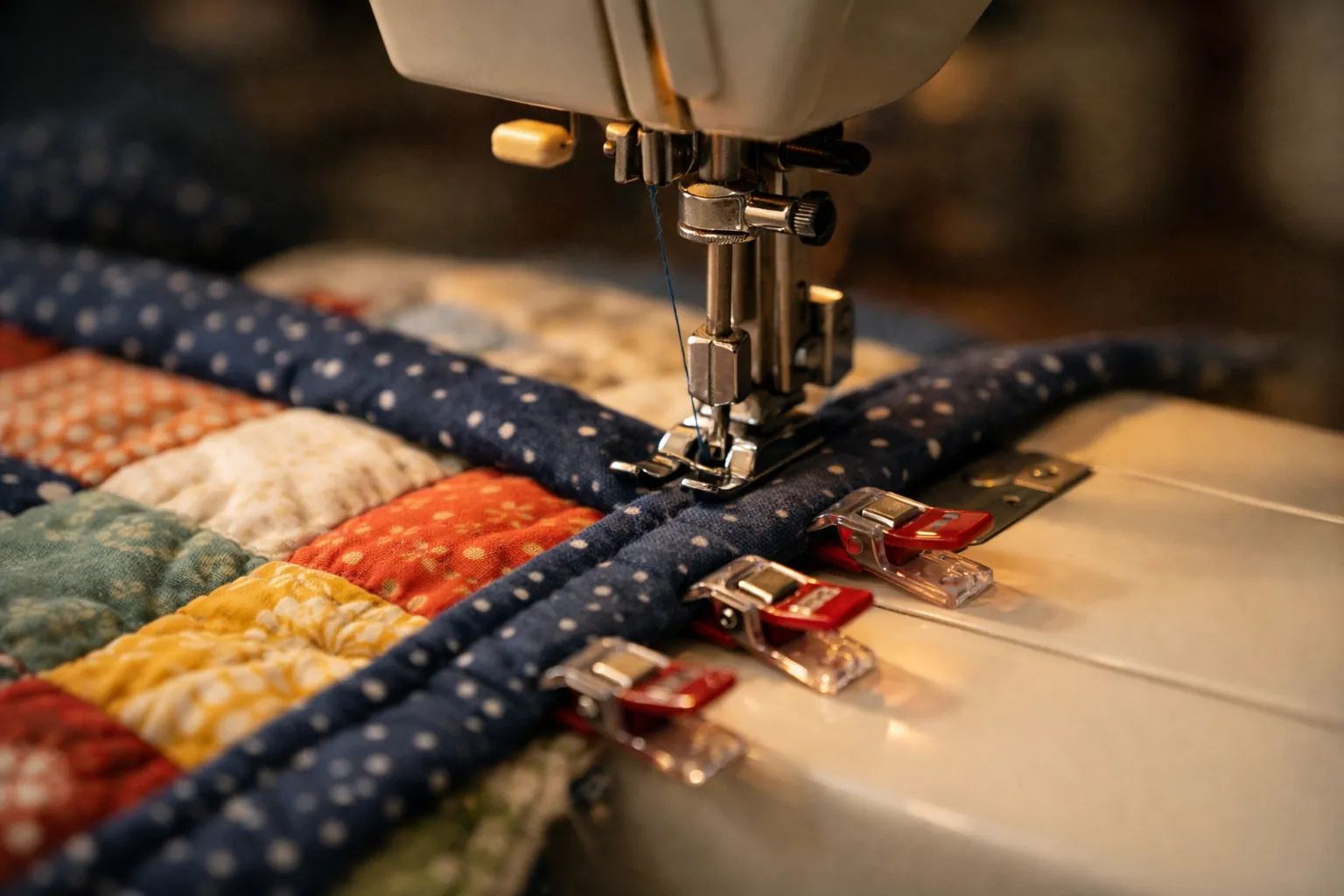
Measure around the quilt, add 12 inches, and divide by 40 to get the number of strips. A 60 by 80 inch throw takes 8 strips; a queen takes 10. Multiply the strips by your strip width and round up to the next eighth of a yard: that's the fabric to buy. The table below has the answer for every common size, worked out with our quilt binding calculator.
Binding by quilt size
Strips cut selvage to selvage from 42 inch quilting cotton, with 40 inches usable, plus 12 inches of overage. Sizes are the planning sizes from Missouri Star's chart (see our printable quilt size chart for where they come from).
| Quilt (inches) | Binding needed | Strips | At 2.25" wide | At 2.5" wide |
|---|---|---|---|---|
| Crib 36 × 52 | 188 in | 5 | 11.25 in · ⅜ yd | 12.5 in · ⅜ yd |
| Throw 50 × 65 | 242 in | 7 | 15.75 in · ½ yd | 17.5 in · ½ yd |
| Throw 60 × 80 | 292 in | 8 | 18 in · ½ yd | 20 in · ⅝ yd |
| Twin 68 × 86 | 320 in | 8 | 18 in · ½ yd | 20 in · ⅝ yd |
| Full 84 × 90 | 360 in | 9 | 20.25 in · ⅝ yd | 22.5 in · ⅝ yd |
| Queen 90 × 95 | 382 in | 10 | 22.5 in · ⅝ yd | 25 in · ¾ yd |
| King 108 × 95 | 418 in | 11 | 24.75 in · ¾ yd | 27.5 in · ⅞ yd |
| Cal king 102 × 100 | 416 in | 11 | 24.75 in · ¾ yd | 27.5 in · ⅞ yd |
The twin row is a close one. 320 inches is exactly 8 strips, so the 12 inch overage is your only spare. If your fabric measures less than 40 inches between the selvages, cut a ninth strip.
With 42 usable inches (some quilting cottons are that wide after trimming) the throw drops to 6 or 7 strips and the king and cal king drop to 10. The calculator lets you change the usable width and shows the spare length, which is the easiest way to check your own bolt.
The formula in four lines
- Perimeter = 2 × (width + length).
- Binding needed = perimeter + 12 inches.
- Strips = binding needed ÷ usable fabric width, rounded up.
- Fabric = strips × strip width, rounded up to the next ⅛ yard (36 inches to the yard).
Worked through for a queen: 2 × (90 + 95) = 370. Add 12 and you need 382 inches. 382 ÷ 40 = 9.55, so 10 strips. At 2.5 inches that's 25 inches of fabric, and 25 ÷ 36 = 0.69 yard, which rounds up to ¾ yard.
This is the same method On Point Quilter publishes, except that On Point Quilter skips the overage and buys one extra strip instead. Their 80 × 90 example works out to 9 strips and ⅝ yard of 2.25 inch binding; ours, with the overage and 42 usable inches, also gives 9 strips and ⅝ yard.
Why the 12 extra inches matter
The perimeter is the length of the quilt's edge. The binding has to be longer than that for three reasons:
- Each diagonal join between strips trims away a little length. A queen's 10 strips mean 9 joins.
- Each mitered corner folds a little binding into the fold.
- You need a loose tail at the start and the end to sew the final join flat.
Cut Sew Quick's binding calculator says "typically 10-12 inches is recommended". We use 12 because a few inches of leftover binding costs nothing, and coming up short at the last corner means cutting and joining another strip.
2.25 or 2.5 inch strips?
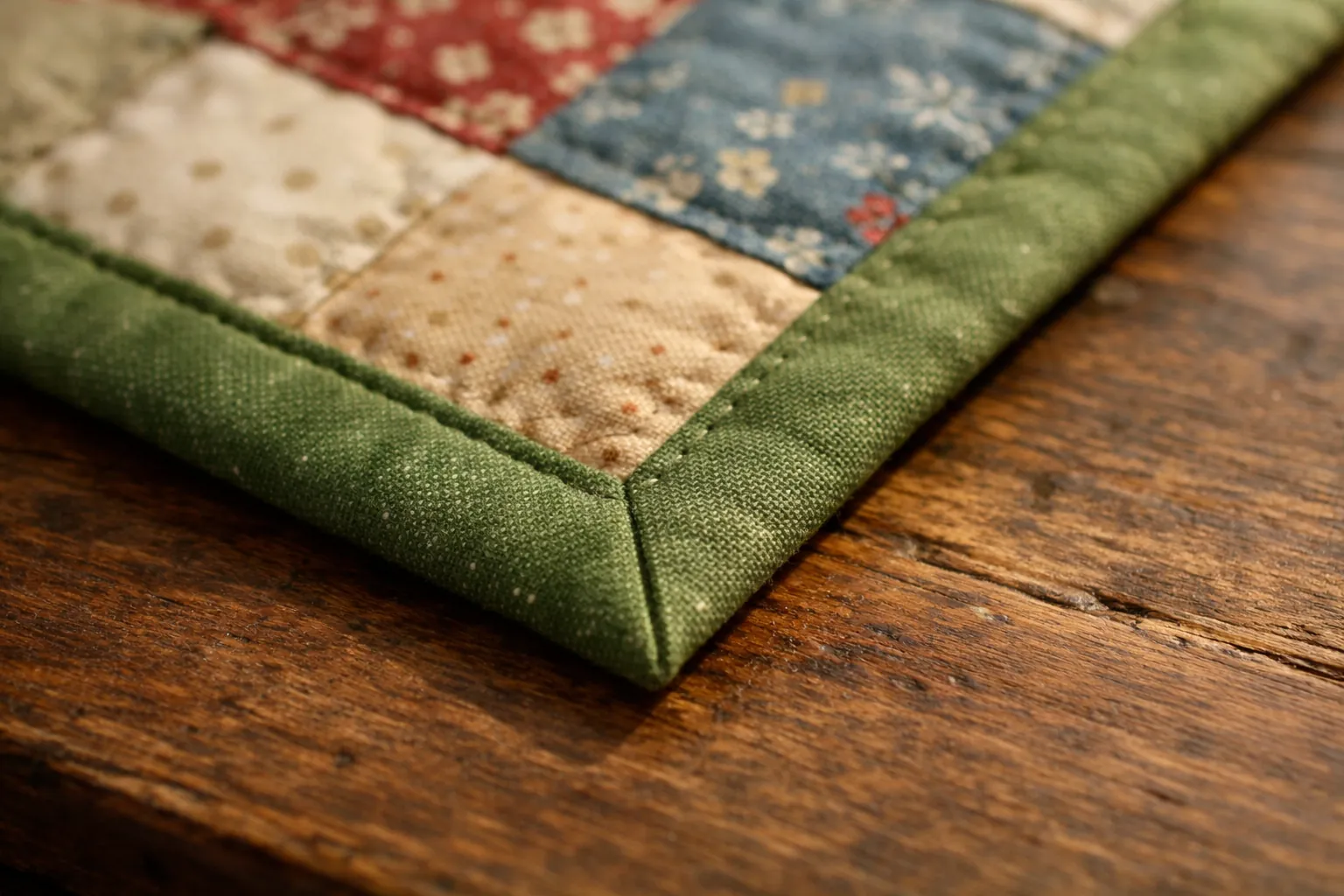
Both are standard for double-fold binding on cotton quilts. The difference is how much binding shows on the front and how tightly it hugs the edge:
- 2.5 inches is the more forgiving width. It wraps comfortably over a standard cotton or cotton-blend batting, and most beginners' patterns call for it.
- 2.25 inches makes a slimmer, firmer edge. It's popular for small quilts and with quilters who machine-finish the binding.
Go wider than 2.5 for a thick wool or polyester batt, or when the seam allowance on the quilt is generous. Only strips under 1.5 or over 4 inches are unusual enough for the calculator to flag.
Cutting and joining, briefly
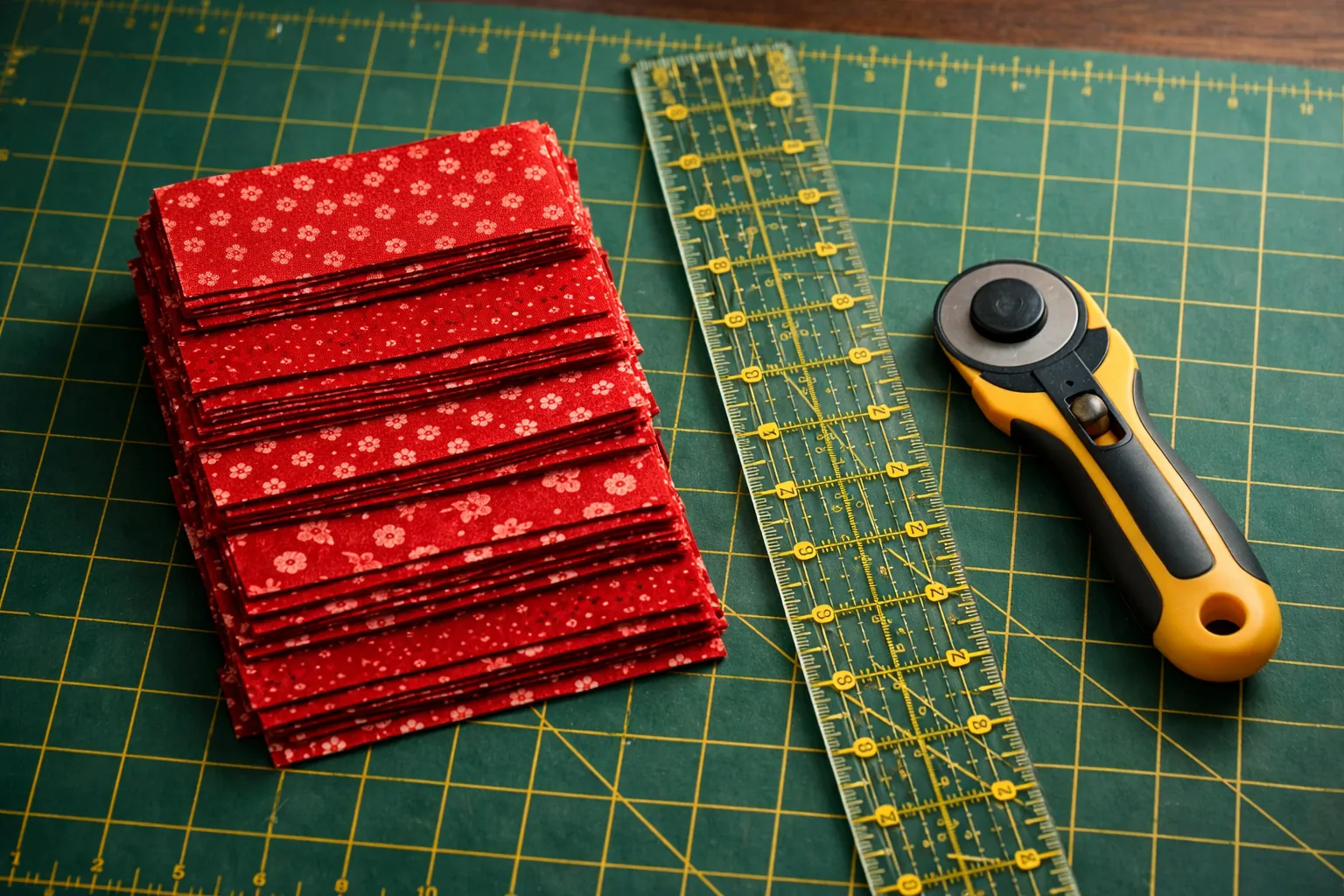
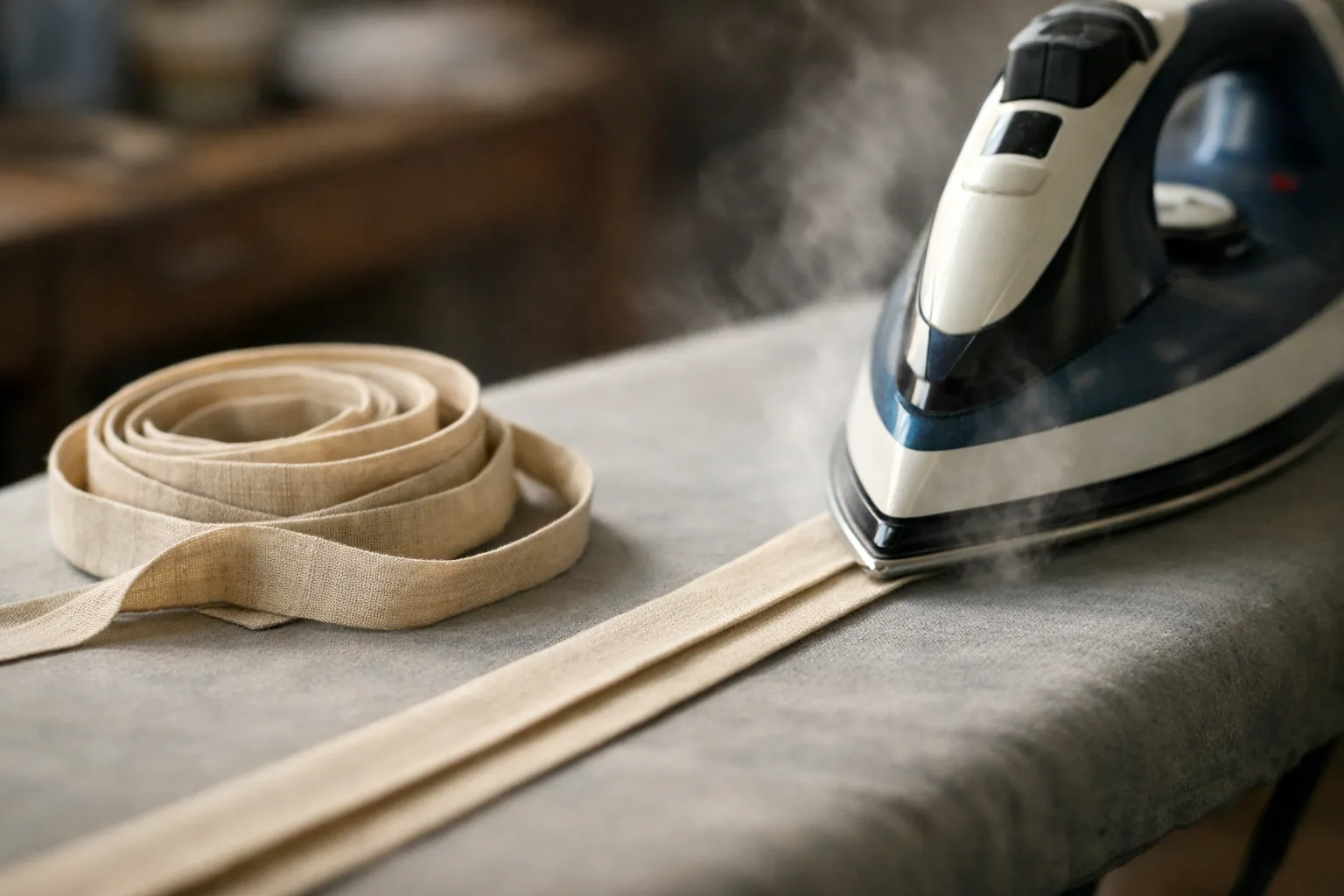
Square up one edge of the folded fabric, then cut strips selvage to selvage at your chosen width. Trim the selvages, join the strips end to end with diagonal seams (they spread the bulk instead of stacking it in one spot), and press the seams open. Press the long strip in half lengthwise, wrong sides together, and roll it up so it feeds off the roll as you sew.
Sewing the binding to the quilt goes through the folded binding plus all three quilt layers, which is where a walking foot earns its place. Our walking foot guide for Brother machines shows which foot fits which model.
Tools that help
- Sewing clips (100-pack). They hold the folded binding to the edge without pins. This pack showed 10,000+ bought in the past month on Amazon when we checked on October 3.
- Fiskars 6 × 24 inch quilting ruler, long enough to cut a strip across folded fabric in one pass.
- Fiskars 45mm rotary cutter, the common size for cutting strips through two layers.
- The Binding Tool, a template for marking where the two tails meet for the final diagonal join.
Next step
If your quilt isn't one of the sizes above, put its exact width and length into the binding and backing calculator. It also works out the backing and the batting, and the same math is behind how much fabric a quilt needs overall.
Sources, checked October 3, 2026: On Point Quilter, "Calculating yardage for binding"; Cut Sew Quick binding calculator (overage); Missouri Star Quilt Co. quilt planning sizes. Table values generated by our calculator with 40 usable inches and a 12 inch overage. Product links show the current price on Amazon. How we research · Affiliate disclosure