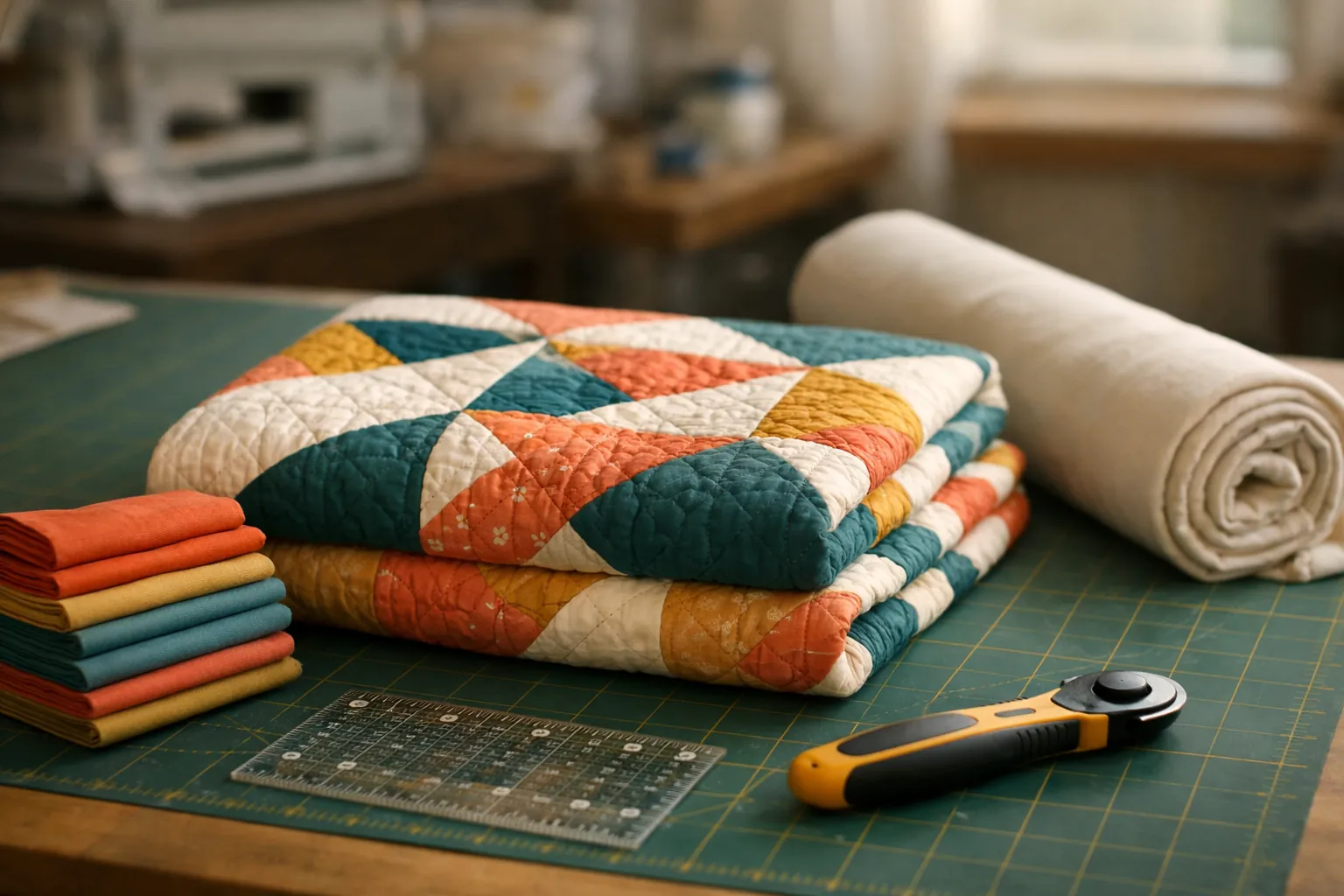
Binding = twice the width plus the length, plus 12 inches, divided into strips cut across the fabric. Backing = the quilt plus 4 inches on every side, pieced from as few widths as possible. Type your finished quilt size below and the calculator does both, plus 108-inch wide backing and the batting piece. Every rounding goes up, never down.
Quick fill (Missouri Star's planning sizes)
Advanced settings (usable fabric width, overage, backing margin)
Binding
Backing from 42" fabric
Backing from 108" wide fabric
Batting
Assumes straight-grain, double-fold binding with strips cut across the width of fabric, and 4 inches of backing and batting beyond the quilt on every side. Yardage rounds up to the next 1/8 yard for binding and 1/4 yard for backing. Bias binding isn't covered.
How the calculator works
Three small formulas, written out so you can do them on the back of a pattern if you'd rather. All measurements are inches; the cm setting converts at 2.54 and converts back for display.
Binding
- Perimeter: 2 × (width + length).
- Binding needed: perimeter + overage. The default overage is 12 inches, for the diagonal joins and the final seam. Cut Sew Quick's binding calculator says "typically 10-12 inches is recommended".
- Strips: binding needed ÷ usable width of fabric, rounded up to a whole strip.
- Fabric: strips × strip width, then rounded up to the next 1/8 yard, since shops cut in eighths.
That is the method On Point Quilter publishes, with one change: On Point Quilter adds no overage and instead buys one extra strip. Both approaches give you a little spare, and the calculator shows exactly how much.
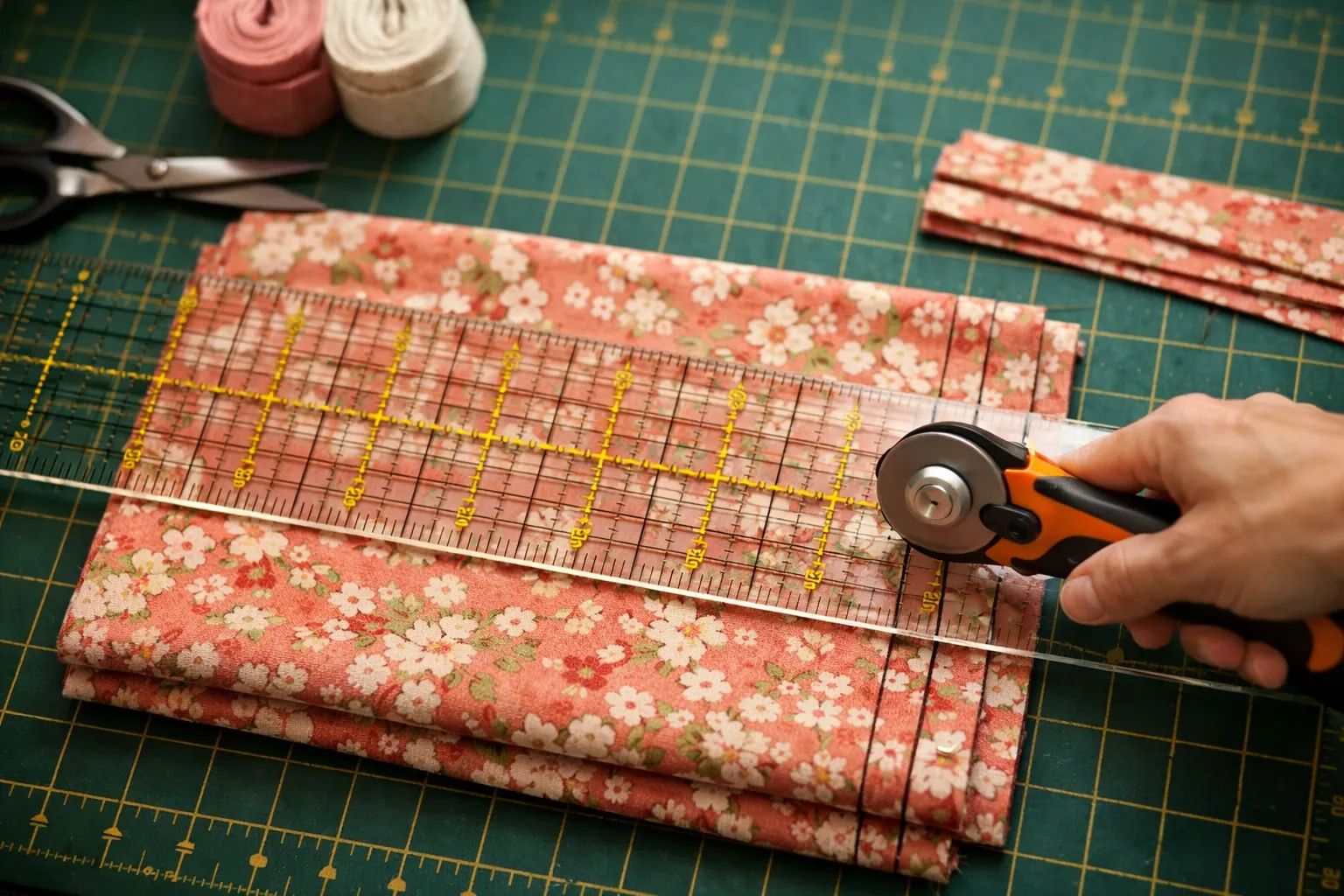
Backing from standard quilting cotton
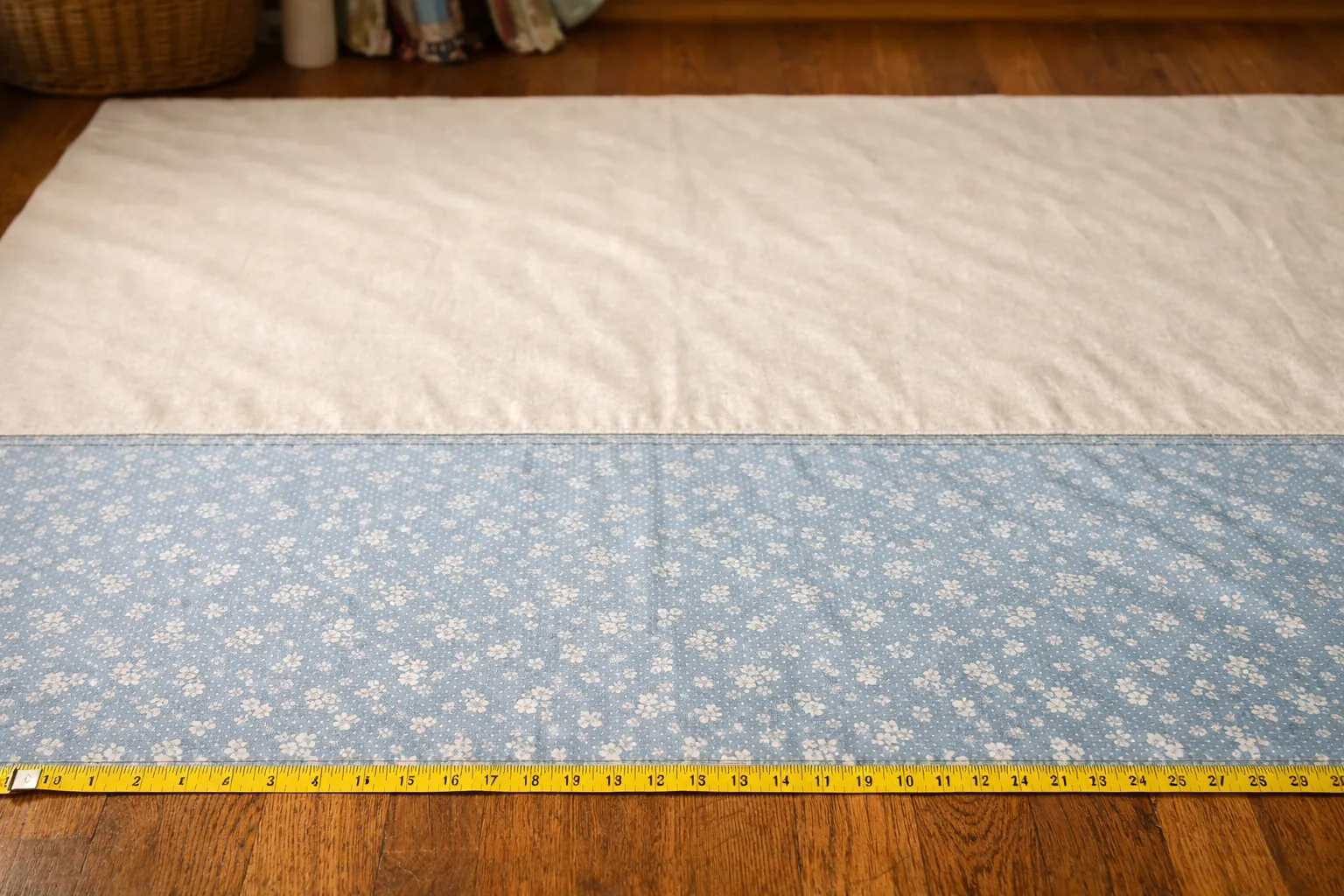
Backing size = quilt + 4 inches on every side, which is the margin Missouri Star Quilt Co. uses. The calculator then tries both seam directions:
- Vertical seams: panels = backing width ÷ usable width (rounded up), each as long as the backing. That is Missouri Star's method, and it reproduces every 42-inch figure in their backing chart.
- Horizontal seams: panels = backing length ÷ usable width (rounded up), each as wide as the backing.
Each total is divided by 36 and rounded up to the next 1/4 yard. The calculator recommends whichever is shorter and shows the other, because some quilters always want the seam running one way. If one side of the backing already fits inside a single width, that direction needs no seam at all.
Wide backing
108-inch backing loses a little to selvages and shrinkage, so the tool assumes 104 usable inches (change it under Advanced settings). If either side of the backing fits inside that width, you only buy the other side. When both fit, the tool picks the shorter cut. Missouri Star's chart cuts along the quilt's length instead, which is why their queen figure is "about 3 yards" and ours is 2 3/4. Both cover the quilt.
Batting
The batting piece is the same size as the backing. The tool names the smallest Warm & Natural package that covers it, using the sizes on The Warm Company's own product pages: craft 34 × 45, baby 45 × 60, twin 72 × 90, full 90 × 96, queen 90 × 108 and king 120 × 124 inches. Other brands package slightly different sizes, so check the label before you assume a match.
A worked example
A 60 × 80 inch throw with 2.5 inch strips, 40 usable inches and a 12 inch overage:
| Step | Math | Result |
|---|---|---|
| Perimeter | 2 × (60 + 80) | 280 in |
| Binding needed | 280 + 12 | 292 in |
| Strips | 292 ÷ 40 = 7.3, round up | 8 strips (320 in, 28 spare) |
| Fabric | 8 × 2.5 | 20 in |
| Yardage | 20 ÷ 36 = 0.56, up to the next 1/8 | 5/8 yd |
The same quilt with 42 usable inches needs one strip fewer: 7 strips, 17.5 inches, 1/2 yard. Two inches of fabric width saves an eighth of a yard, which is why it pays to measure your actual bolt between the selvages.
Check the math: the six test cases this calculator is built against
Each button loads the example into the calculator above so you can see it reproduce.
| # | Inputs | Expected | Try it |
|---|---|---|---|
| 1 | Throw 60 × 80, strip 2.5, usable 40, overage 12 | 292 in needed, 8 strips, 20 in of fabric, 5/8 yd; 320 in made (28 spare) | |
| 2 | Same quilt, usable 42 | 7 strips, 17.5 in, 1/2 yd | |
| 3 | On Point Quilter's 80 × 90, strip 2.25, usable 42, overage 12 | 352 in needed, 9 strips, 20.25 in, 5/8 yd. On Point Quilter's own method (340 ÷ 40, plus one spare strip) also lands on 9 strips and 5/8 yd. | |
| 4 | Missouri Star's 58 × 66 backing, extra 4, usable 40 | Backing 66 × 74. Vertical: 2 panels, 148 in, 4 1/4 yd (matches Missouri Star). Horizontal: 2 panels, 132 in, 3 3/4 yd, which the tool recommends | |
| 5 | Wide back for 90 × 95, extra 4, wide usable 104 | Backing 98 × 103, both fit, shorter cut 98 in = 2 3/4 yd of 108"; the other orientation is 103 in = 3 yd (Missouri Star: "about 3 yards") | |
| 6 | Validation: width 0, width 150, strip 5 | 0 gives an error and no result; 150 gives the range message and no result; strip 5 gives a warning but still calculates |
What it doesn't do
It assumes straight-grain binding cut across the width of fabric. Bias binding uses a different calculation (you cut from a square), and scalloped or curved edges need more length than the perimeter suggests. Add a generous overage if your corners are mitered extra wide or your binding is very thick.
It doesn't know your pattern, so it can't estimate fabric for the quilt top itself. For that, see how much fabric you need for a quilt, which walks through estimating the top from the block count.
Quilting cotton shrinks a little when washed. If you prewash, measure the usable width after washing; The Warm Company says to expect about 3% shrinkage in Warm & Natural batting on the first cold wash, so a quilt you wash after finishing also comes up a touch smaller.
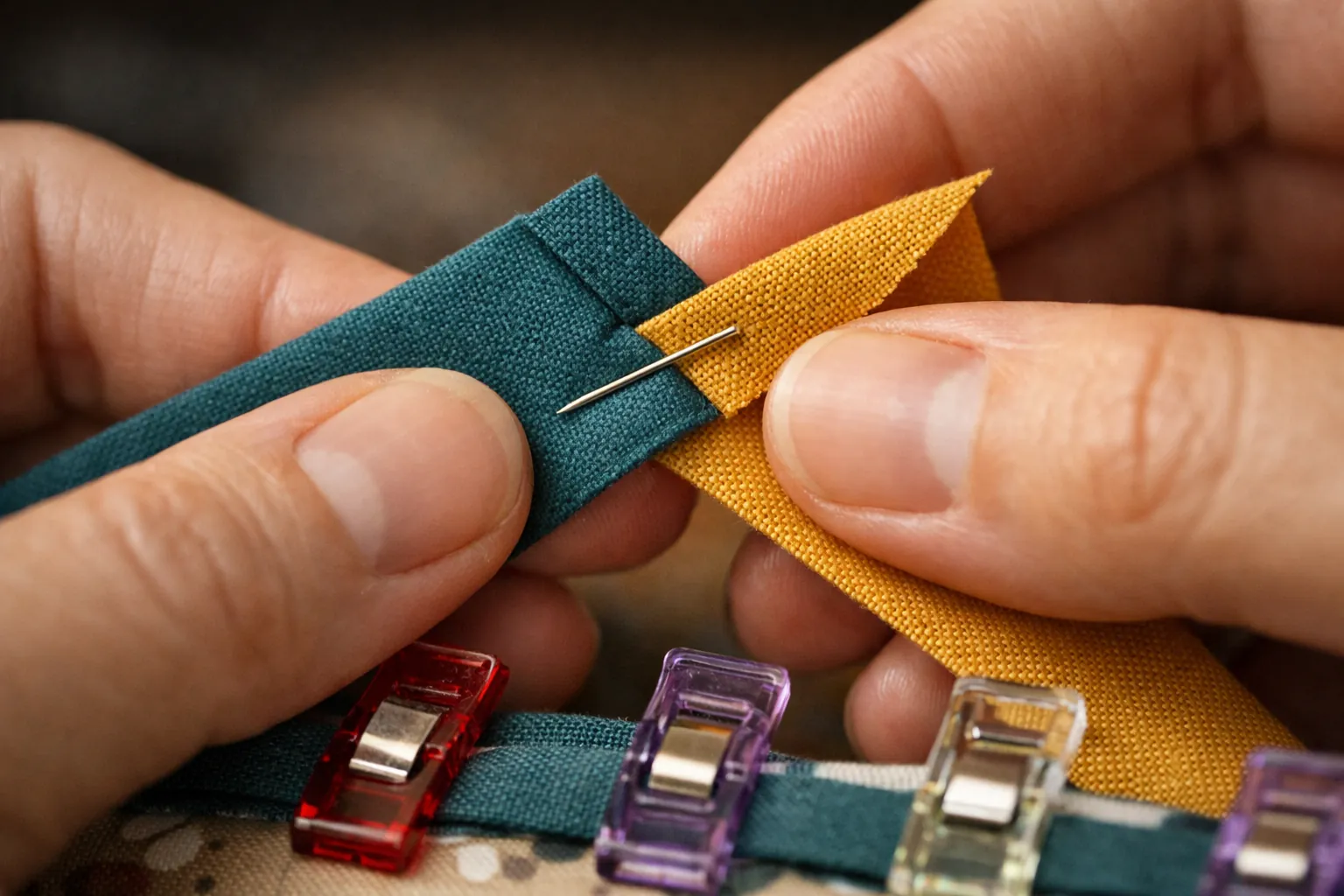
What you'll need for binding
- Sewing clips (100-pack). Clips hold folded binding to the quilt edge without pin holes. This pack showed 10,000+ bought in the past month on Amazon when we checked on October 3.
- The Binding Tool, a ruler for measuring the final overlap when you join the two binding tails.
- Warm & Natural cotton batting, twin 72 × 90, which covers backings up to that size, including the throw sizes above.
Quilting the layers on a home machine goes far better with an even feed. Our walking foot guide for Brother machines covers which foot fits which model, and the best sewing machines for quilting covers the machine itself.
Plan the whole quilt
- Printable quilt size chart: mattress sizes, typical quilt sizes and binding and backing for each, generated with this calculator.
- How much binding for a quilt: an answer table by bed size at 2.25 and 2.5 inch strips.
- How much fabric for a quilt: top, backing, binding and batting by size.
Sources, checked October 3, 2026: Missouri Star Quilt Co., "How to Calculate Quilt Backing Yardage" (backing margin, 40 inch usable width, quarter-yard rounding, wide-back chart); On Point Quilter, "Calculating yardage for binding" (strip method); Cut Sew Quick binding calculator (10 to 12 inch overage); The Warm Company Warm & Natural product pages (batting package sizes, shrinkage). Product links show the current price on Amazon. How we research · Affiliate disclosure